• About Judith A. Ross

Shifting Gears

Shifting Gears

Category Archives: aging

Christmas Traditions Aren’t Just for Kids

13 Thursday Dec 2012

Posted by judithar321 in adult children, aging, friendship, mid-life transition

≈ 6 Comments

Tags

Chanukah, Christmas, Christmas tree, empty nest, family traditions, holidays, Second Lives Club

A hint of light. © Cheryl Fuller Sparks

A hint of light. © Cheryl Fuller Sparks

Every year since he left home, a  few weeks before Christmas, our younger son, our very own Kris Kringle, sends us a message. And every year, he asks the same question, “Have you bought a tree yet?”

For a Jewish girl growing up in a decidedly WASP town in Massachusetts, a Christmas tree, and not a Chanukah menorah, on display in the living room was an object of both scorn and envy.

Scorn because part of me liked being different, it somehow made me wiser, more sophisticated than my Christian classmates. Envy because I also wanted to be part of the group. In truth, my classmates weren’t very sophisticated, and a few of them viewed my Jewishness as a “weird” difference.

Luckily, I was able to partially resolve this conflict during my teenage years by showing up at my next door neighbors’ house on Christmas morning. They always made me feel welcome as I sat next to their daughter, my best friend, and watched as presents were handed out and opened one-by-one.

I didn’t care that there were no gifts for me under that tree, I just wanted to soak in their yearly ritual, along with the love and togetherness that they shared with such ease.

Christmas Tree Tradition

That experience is why I agreed to a Christmas tree when it came time to celebrate the December holidays with my own family. My husband is not Jewish, and like me, not religious. But his family did celebrate Christmas. And so the yearly tree entered my life.

Given my Jewish roots, having one on display in my own living room felt embarrassing the first few times. The embarrassment eventually faded, but my ambivalence toward the pine needles everywhere, the disruption to my orderly house, the Christmas chaos, has not. Each holiday season, my inner protest — before I grudgingly give in — is as predictable as Kris’s query.

Born in the dead of winter, Kris (not his real name) is a hard core Christmas enthusiast. The cold air, the snow, the gifts, and the tree, resplendent with lights and ornaments, and emitting its piney scent, have always excited him. In adulthood, his appetite for gifts has diminished— this year’s list was comprised almost entirely of necessities — but his love for the Christmas tree has grown stronger.

Christmas tree in the storm. © Cheryl Fuller Sparks

Christmas tree in the storm. © Cheryl Fuller Sparks

This year, however, Kris won’t be coming home. He’s in Morocco with the Peace Corps. His older brother enjoys the holidays too, but his is a more relaxed attitude. He doesn’t make it his job to call in and check on our progress with holiday preparations. He and his girlfriend, whose family doesn’t celebrate Christmas, will arrive on the 24th.

So I wondered whether we could forgo the tree. After all, Kris won’t be here to keep us in line. Then, the first week in December, this chat message popped up on my computer screen:

Kris: hey! christmas tree made

me:  wow, cool! send a photo!

Kris:  it’s more like a christmas pile-of-twigs-and-branches ….

Olive, palm, and fig. © Karsten Syversen

Olive, palm, and fig.

As soon as I saw this photo, I knew that I wanted a tree in our living room this year.  And not just because Kris will be looking for it on his computer screen during our Christmas Day video chat. His makeshift tree made me realize something.

Empty Nest and Family Traditions

Those family traditions aren’t just for our kids, they’re for us, too. If we discard them, our empty nest will feel even emptier. It doesn’t matter that we ultimately went for a tree, and not a menorah in our living room. The point is that we did something every year and we did it with joy and open hearts.

No matter how far apart and different our Christmas trees may be from year-to-year, putting them up in tandem will help us feel close — even when there is an ocean between us.

This year’s tree will honor the nearly 30 Christmas trees we’ve had as a family, and the 25 or so we’ve had since Kris was born.  And it honors the love I felt in my neighbors’ home all those years ago.

I’ll think of that family as I do every Christmas morning. The parents are elderly now, and the kids live in separate states, but each of them will be gathering around a tree this year too.

Photo Credits:

“A hint of light” and “Christmas tree in the storm” by Cheryl Fuller Sparks.

“Olive, palm, and fig.” by Karsten Syversen.

****

This piece was written as a guest post for Second Lives Club.
This Zine Is the Real Thing

07 Wednesday Nov 2012

Posted by judithar321 in aging, art, friendship, inspiration, writing

≈ 3 Comments

Tags

blogging, editing, Elizabeth Cohen, online magazine, Talking Writing, zine

“Age” © Elizabeth Cohen

Sometime during the summer of 2009, I received an email from my friend, Martha Nichols, inviting me to participate in a literary blog she was starting called “Talking Writing.” A seasoned writer and editor, Martha sent the email to several of her writing colleagues asking them to participate in and comment on her new endeavor.

A year later, in the fall of 2010, Martha and the equally experienced, Elizabeth Langosy, with some help from me, launched Talking Writing: A Magazine for Writers. Since that time, I have had the great luck and pleasure to be a part of this groundbreaking endeavor.

Working long hours, Martha and Elizabeth have poured their brilliance and passion into creating a fully formed magazine that is beautiful to look at and loaded with thoughtful and unique voices and perspectives. If you haven’t read it, you should.

In fact, I’d encourage all of my blogging friends to think about pitching a piece or two. TW can’t offer you money — what literary magazine can? — but  you will have the satisfaction of working with its talented team of editors, and your byline will appear in the pages of a zine that receives close to 9000 hits per month.

While I enjoy the freedom of writing unedited on my own blog, it also feels good to put myself in the hands of these capable and talented women. They help their writers develop their pieces in the most supportive way possible. Martha and Elizabeth are great teachers and they always make my work better.

So I was flattered when they asked to republish a post from my blog. Martha assured me that it just required a “few, minor edits.” And while she was true to her word, those edits helped turn a blog post into a publishable piece.

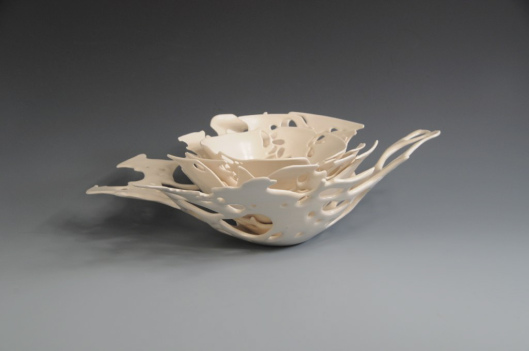
“Porcelain Bones,” appeared here last March as “Inside a Potter’s Studio, a Daughter Finds Answers.” I hope you will give the edited version a read. While you are there, check out the rest of TW’s November/December issue — and if you haven’t already, take a few extra seconds to subscribe.

Turning Back the Clocks

05 Monday Nov 2012

Posted by judithar321 in aging, environment, meditation, pets, politics

≈ 3 Comments

Tags

2012 election, Eastern Standard Time, fall foliage, garden, hurricane Sandy, time

Last weekend we turned back the clocks. We do this every autumn in the U.S. — excepting Hawaii and parts of Arizona. I always savor the extra hour in the morning, yet as the day progresses, and the light thins, that bonus hour is soon forgotten. During this annual transition, evidence of time’s passage is everywhere.

The heat of late summer is long gone, and the brilliance of early fall is fading fast. The winds from Hurricane Sandy expedited the process. But a few, last gasps of color remain.

Changing the clocks marks the passage of Time.

Those turkey chicks that sashayed through the yard last August are all grown up.

Time.

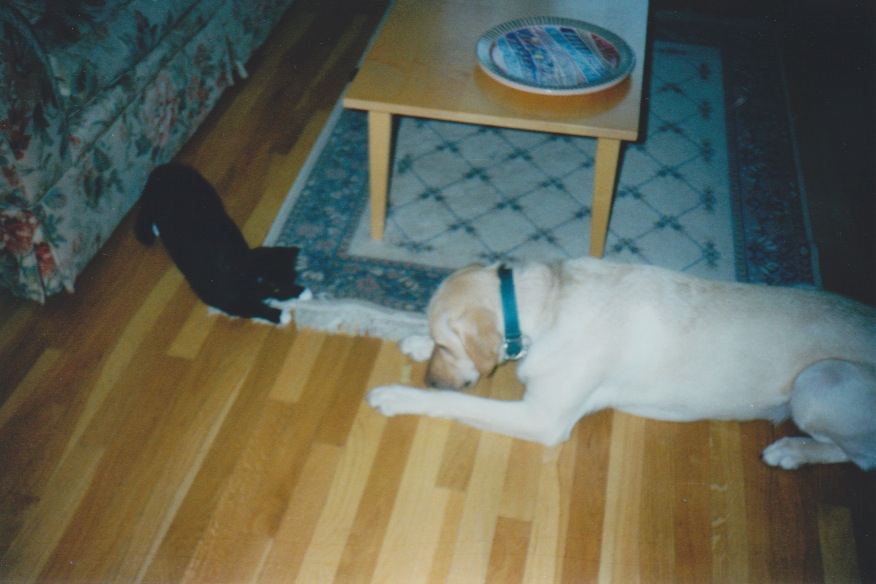
We buried our 16-year old cat, Boots in September. She was a plump bundle of thick black fur that padded around on dainty white feet. Boots, I should mention, was an excellent mouser, and she proudly announced every kill in a loud, guttural, yowl. When she joined our family, she was tiny enough to fit inside a teacup, and our boys were aged 10 and 13.

Time.

She has been gone less than two months, and yet her grave has already weathered its first major storm.

And more Time.

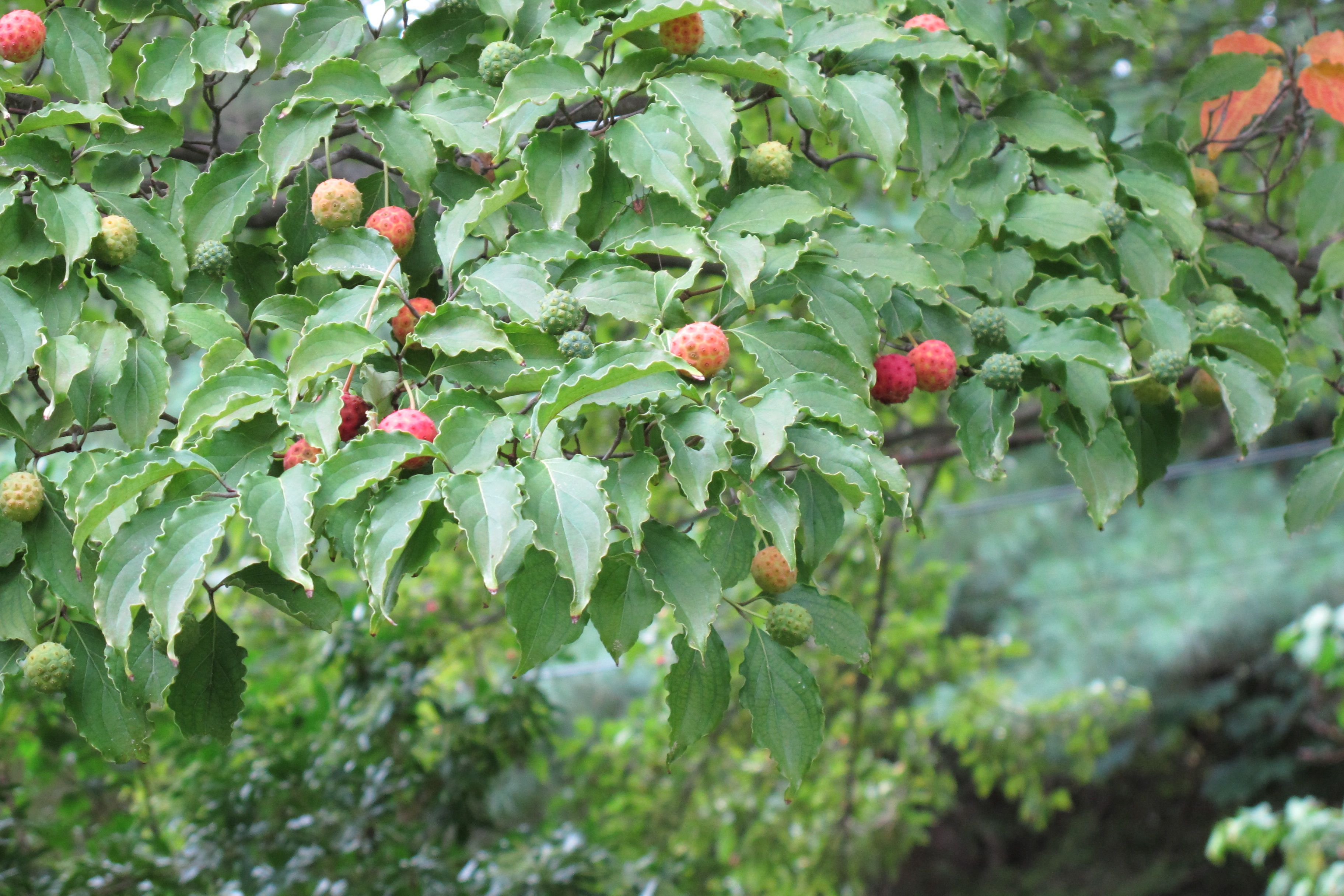
The race toward winter has begun. This dogwood shrub, for example, has already donned its red winter coat.

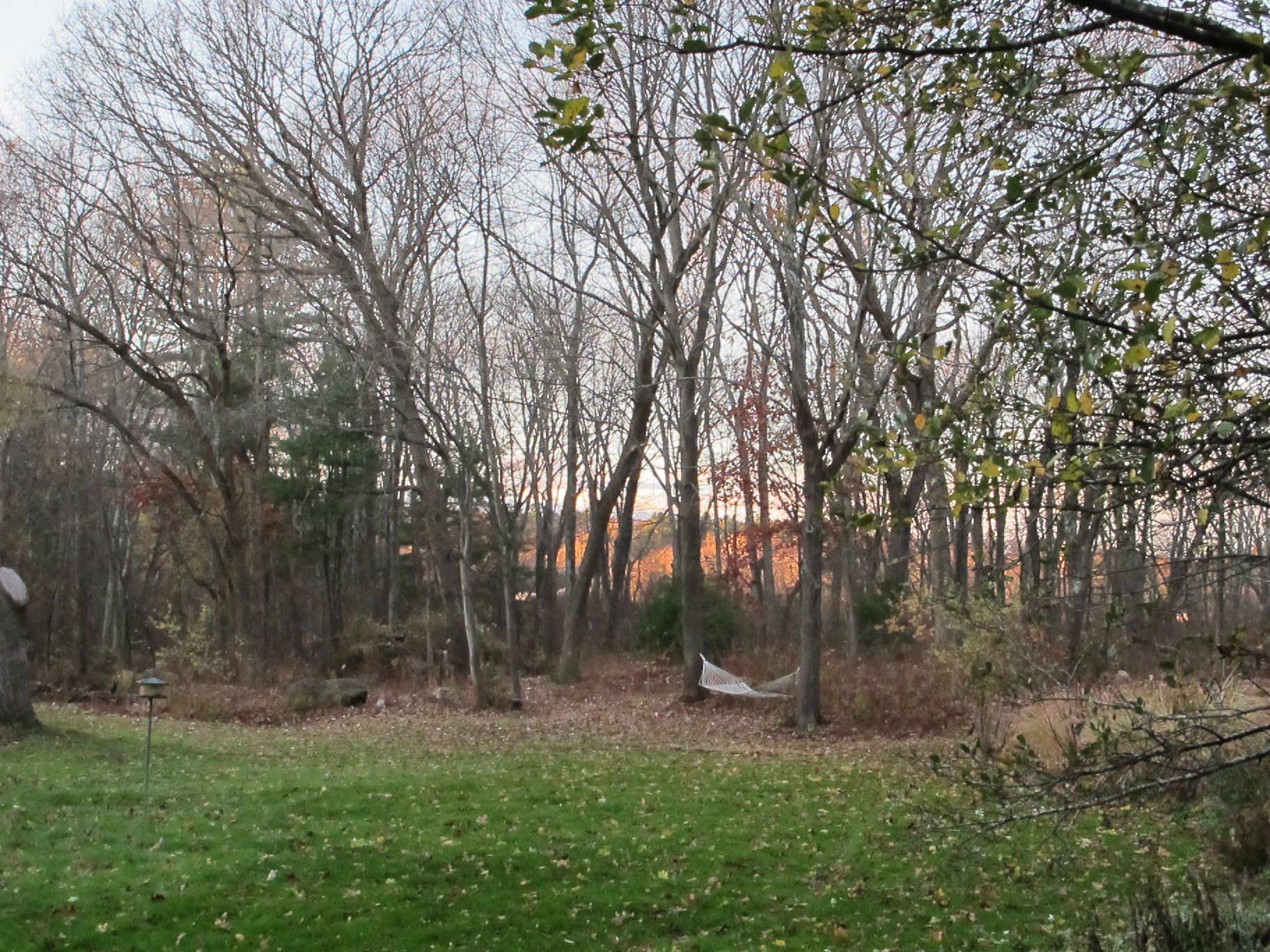
With most of the leaves down, we can now see through the woods behind our house into the farmer’s fields and beyond.

We can turn the clocks back, set them ahead, and stop them. But no matter what we do to our timepieces, the future arrives with every minute.

Tomorrow is election day. The future of our country’s 99% hangs in the balance. Will the voters turn back the clock, erasing hard fought gains and reopening old battlefields? Or will they keep up with Time and allow the country to continue moving forward?

Fall Forward

12 Wednesday Sep 2012

Posted by judithar321 in adult children, aging, environment, inspiration, mid-life transition, writing

≈ 7 Comments

Tags

empty nest, freelance writing, garden, work

There’s a definite chill in the air. Last night I layered two wool blankets on top of the summer one. Before long I’ll have to pull out the down comforter. Outside, the garden is making its yearly journey from the sunny yellows of mid-to-late summer, to the richer, more textural pinks, reds, and purples of my fall bloomers.

As the garden makes its turn into fall, and we pile on the blankets, it’s easy to wax nostalgic about the days when there were four of us rushing out the door each weekday morning. But I’m resisting that temptation.

Instead, I’m focusing on what I will make happen — as opposed to what might happen — next.

It’s been two years since I lost my job, and during that time, I have created a framework on which to build my days.  Daily walks with the dog, thrice weekly swims, and Tuesday and Thursday afternoons working at a local store, provide the bones for my week. In between each of those activities I work on my blog and other writing assignments.

The transition from the formal structure and demands of full-time employment and parenthood that I’ve clung to for most of my adult life, to the looser requirements of freelance work and empty-nest living, feels like a chasm that I will continue to cross for some time to come.

I don’t know if I will ever feel I have “landed” again. In fact, it’s possible that I’ve never felt that way. Not really. What I do know is that my current writing assignments, both paid and unpaid, feel more authentic, are more satisfying, and bring me more joy than anything I’ve done in the past. And, much to my surprise, this new work and lifestyle have brought me friends and supporters from some unlikely and even far-flung places.

Although I’m still working on how to turn this more joyful work into a decent income, I am grateful that I no longer have to fake excitement or passion when I don’t feel it. I can say what I mean and mean what I say. The ability to just be myself has been one of the most rewarding aspects of my ongoing transition.

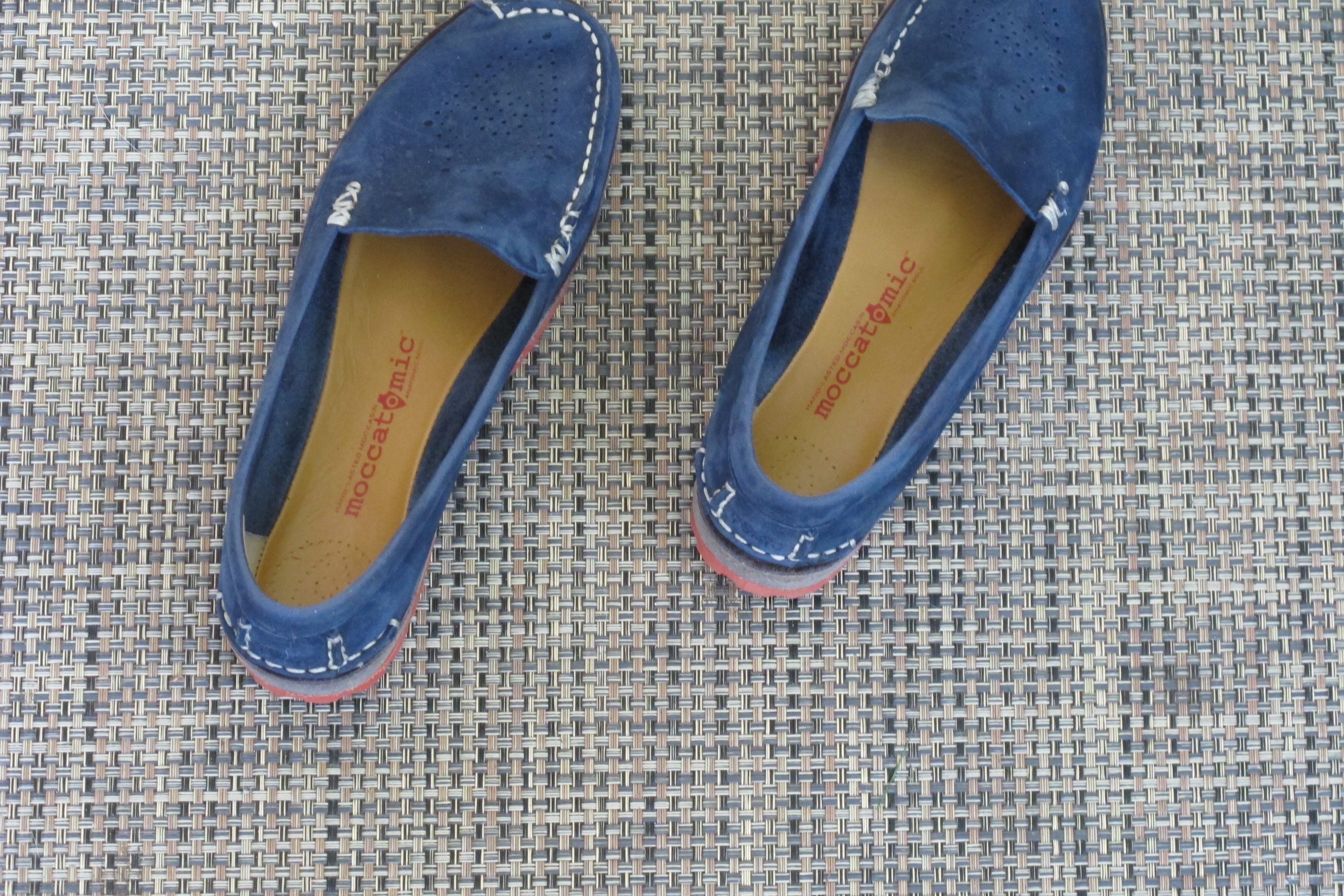
This fall, I’m putting on some new shoes, and adding to my my already existing framework. My new DIY structure will continue to evolve. It may never be fully finished, but it will be strong enough and flexible enough to feed my brain and nourish my psyche. With luck and hard work, it might just sustain me through the ever-changing, always surprising, journey ahead.

Inspired by Older Women

02 Monday Jul 2012

Posted by judithar321 in aging, art, health, inspiration, mid-life transition, music, writing

≈ 5 Comments

Tags

"Pilgrimage", Annie Leibovitz, Doris Kearns Goodwin, empty nest, feminism, Patty Larkin, role models, unemployment

Women who are in their sixties and older have been on my mind lately. While I have a few years before my own 60th birthday, I’m noticing that late middle-age/ early old age can be one of the most powerful and vibrant times in a woman’s life.

It started at a Patty Larkin concert that took place right here in Concord. I’ve listened to her music for years, but I’d never seen her in person.

If you’d asked me to describe her voice, I’d have told you that it has a smile in it. And after seeing her play, I can now say that, in fact, she does smile when she sings.

From where I sat, Larkin looked and sounded like a woman in her early forties. Her body is toned, and her smooth, youthful voice reveals none of the wear and tear that often comes with time. And the inventive way she noodled around on her electric guitar reminded me of my 29-year-old son, who plays and composes experimental music.

“How old do you think she is?” I asked my husband during intermission. He pulled out his smartphone and looked her up. “Sixty-one,” he told me. Really? Wow.

Close up she may not look quite as young as she does from afar, but the vibrancy and joy she exudes while performing is that of an artist at the height of her powers.

A few weeks later, another powerful, older woman came across my radar. I reviewed Lilly Ledbetter’s memoir, Grace and Grit: My Fight for Equal Pay and Fairness at Goodyear and Beyond.

After 19 years as a supervisor, Ledbetter learned that Goodyear was paying her significantly less than her male counterparts. She took her battle for fair pay all the way to the Supreme Court.

The court decided against her, ruling that the statute of limitations had run out on her claim. She lost her personal battle, but she had the guts (and grit) to persevere so that the rest of us wouldn’t be treated in the same way.

In one of his first official actions as President, Obama signed the Lilly Ledbetter Fair Pay Restoration Act, which provides a more reasonable time limit for such claims. Now in her early 70s, Ledbetter went from the factory floor, to testify before Congress.

While reading Ledbetter’s memoir — which I could barely put down—I was reminded of how filthy factory work is (I welded electronic bug zappers during college), and of the gauntlet many women must run when they work with men who are unable to check their sexual urges at the workplace door.

Ledbetter isn’t an artist, nor is she a glamorous celebrity (though she’s both eloquent and elegant in words and appearance), but a regular person who grew up in poverty, worked grueling hours to help support her family,  and then became a spokeswoman for us all. She is forever on my list of inspirational women.

Then last week, at another event in town, I heard historian Doris Kearns Goodwin, 69, and photographer Annie Leibovitz, 62, discuss Leibovitz’s latest project, “Pilgrimage,” which is currently on exhibit at the Concord Museum.

These two smart, articulate women shared personal stories filled with self-deprecating humor. And while Goodwin awakened my somewhat dormant interest in history, my focus was on Leibovitz.

“Pilgrimage” is a photographic study of places and the personal effects, work, and surroundings of several historical figures. Some of them, Thoreau, Emerson, and Louisa May Alcott once lived here in Concord.

Leibovitz began the project during a difficult time in her own life. She needed to do something that wasn’t an editor’s assignment, but that was instead self-driven and that satisfied her own interests and curiousity. In healing herself, she did what many of us do —what I do when I’m overwhelmed, sad, or in a rut — she shifted gears and focused on the minutiae.

While I might weed the garden, detail the house, or start a cooking project, Leibovitz focused her camera on the light outside Emerson’s window, the beat-up surface of Virginia Woolf’s desk, and Georgia O’Keefe’s box of handmade pastels.

Both Leibovitz and Goodwin agreed that it is these kinds of details that make the person come alive. Later, as I walked through the exhibit past photographs of Annie Oakley’s riding boots, Marion Anderson’s concert gown, and the top edge of Eleanor Roosevelt’s desk drawer, etched with her signature, they came alive for me too.

Rather than becoming diminished as they age, these women are only getting stronger. I have heard women my own age complain that they feel invisible. With no regular job and an empty nest, I occasionally feel this way too.

Women like these show us that we don’t have to fade away.  If we keep working, doing, and learning, we can be better, we can do more.

I leave you with another video of Patty Larkin. Check out the way she works that electric guitar with her bow.

Contemplating a Mid-Life Migration

04 Monday Jun 2012

Posted by judithar321 in adult children, aging, environment, friendship, mid-life transition, travel, writing

≈ 18 Comments

Tags

bird watching, Concord MA, David Byrne, empty nest, friendship, marriage, moving in mid-life, retirement, work

Last weekend we shared homemade pizza with friends on our back deck while a great blue heron sailed overhead. Throughout the course of the meal, we heard orioles singing and saw flashes of orange as they flitted across the yard between their nest in the willow tree and the fruit trees in our garden. A grosbeak, hummingbirds, and various other winged residents also made appearances as they went about their evening business.

When you aren’t confronted by the ticks, poison ivy, and mosquitoes, and don’t have to cut the grass, weed the garden, or shovel the driveway when you’d rather be doing something else, this place can feel like paradise.

We moved to Concord almost 20 years ago, and Paul and I still remember a day that first spring when we looked out a window to see our 10-year-old son trailing a pheasant across the back lawn, nearly stepping on the end of its long, sweeping tail.

Our pheasant-follower and his younger brother grew up here. They went to school here. And now they have both moved on to make their own homes and create their own exciting adventures. And as hard it will be to leave this house and yard behind, Paul and I are ready to move on too.

At least we think we are.

In an ideal world, we could create an oasis like this one in the middle of some city. A city that has sidewalks, public transportation, and a rich cultural life —all things that are missing and are sorely missed in our current location.

I want diverse neighbors, a corner store, a local cafe, and a bit of nightlife. I’d love to attend a movie or a concert and then walk home afterward while discussing what we’ve just seen or heard.

In his recent op-ed piece for The New York Times about New York City’s new bike-share program, David Byrne captured my idealized version of city living as he described the different routes he takes on his bike to pick up groceries, commute to work, or visit friends. And he talked about making his home in the big city.

“I just turned 60 and have no plans to retire to the suburbs,” he writes. “I love it here.”

“That’s what I want,” I thought. “A place I can fall in love with, a place that stimulates my intellect and fosters my creativity.”

But then, just below his paean to urban life was another op-ed by his daughter, Malu, who described the optimal environments of young artists like herself who have left the city because of its high cost and many distractions.

“I might have to escape New York to keep my artistic spirit alive,” she writes.

Somewhere between Byrne’s viewpoint and that of his daughter lies the crux of my dilemma. I want the bustle and excitement of the city but not the noise. I want to be able to move around freely even when—especially when — I am too old to drive, but worry that the constant press of people will grate on my introvert soul.

While any place that Paul and I are together will feel like home, I also want to find  my own niche. I want to write in my office and then meet friends for coffee at a neighborhood cafe, or spend the afternoon wandering around a nearby museum.

I know that there is no ideal place, there are only places that you make idyllic. Paul and I will take a few trips, and maybe someplace will click for both of us. Maybe no place will, and we’ll decide that this is the only home we want.

In the meantime, it’s fun to weigh our options and examine the possibilities. That’s the joy of being middle aged. Even with financial restrictions, we are as free as we’ll ever be to do what we want.

I will be sad when/if we leave this house and town that has become so familiar and where we have lived so much life. And I’ll miss those birds. But I’m also ready to follow their example. Yes, they return every spring, but in the fall they leave that empty nest without hesitation. They move forward.

Armchair Traveler

21 Monday May 2012

Posted by judithar321 in aging, inspiration, meditation, mid-life transition, travel, writing

≈ 5 Comments

Tags

Athenas Head, Dominique Browning, Heather Robinson, long boarding, Lost in Arles, Martha Nichols, Slow Love Life


Yep, it’s a pretty slow day here at the homestead. We’re just sitting around and thinking, cogitating, mulling things over, chewing the fat with ourselves. You get the picture

When I find myself stuck in the mental doldrums where there is both everything and nothing to write about, I look for inspiration elsewhere.

I didn’t have to look far: This morning two beautiful pieces about traveling crossed my screen almost simultaneously.

The first is by my long-time friend Martha Nichols. In her piece, “Why Travel?” she describes what travel does to her “inner landscape.”

“When you go to a new place, you’re more vulnerable,” she writes. “It’s as if a crack of light opens in the clouds, illuminating your inner landscape as well as what’s passing outside.”

This piece reminds me that no matter how far I roam, I can never escape myself. Martha explains why the hard parts of travel are also the most valuable.

Then, over at Lost in Arles, my new friend Heather Robinson tells the story of how she came to live in Arles. She says it’s a story that bears repeating and I say it’s a story worth sharing.

“Inside an abandoned church, we looked at the work of Harry Gruyaert’s ‘Rivages,’ ” she recalls. “We turned ourselves towards beauty and that stirring surged up into tears. We knew. This was where we were ready to be.”

Indeed, Heather’s entire blog is a celebration of the beauty she finds in the landscape, villages, and food around her. Every one of her posts is un petit cadeau dropped into my inbox.

And then, because I also needed a bit of bucking up, I reread a favorite piece by Dominique Browning. “Go where the love is,” she advises.

“That means not only doing what you love, but being where people love you–where they understand what you do, and, more important, where they have an affinity for who you are. Where the wellspring of creativity can be nurtured.”

And that’s what I’ve been doing these past couple of years as I search for new ways of working. Her post reminds me that if I keep planting the right kind of seeds, something satisfying and meaningful will eventually take root.

And finally, I leave you with this video of fearless young women cruising down la Sierra de Madrid. I may have a middle-aged body, but my spirit still soars like a twenty-something’s and I can feel the wind in my face and the road vibrating under my wheels as I watch them sail down the mountain on their longboards.

Looking Beyond the Weeds

30 Monday Apr 2012

Posted by judithar321 in aging, environment, friendship, inspiration, meditation

≈ 4 Comments

Tags

foliage, garden, plants

In gardening, as in life, it’s easy to get stuck in the weeds. It’s easy to focus on the unwelcome clumps of grass and dandelions, the bugs, and the Hostas behind the garage that aren’t coming back.

We gardeners have to remind ourselves that the garden is there to enjoy. It’s a place to bathe our eyes in beauty; inhale the scent of the ground, the trees, the plants and their flowers; and absorb the steady thrum of nature all around us.

It’s true that sometimes what we have doesn’t live up to our vision, but what in life ever does?

So after spending these past weeks lingering in life’s doldrums, I decided to back away from my desk, pick up my camera, and admire what is growing all around me.

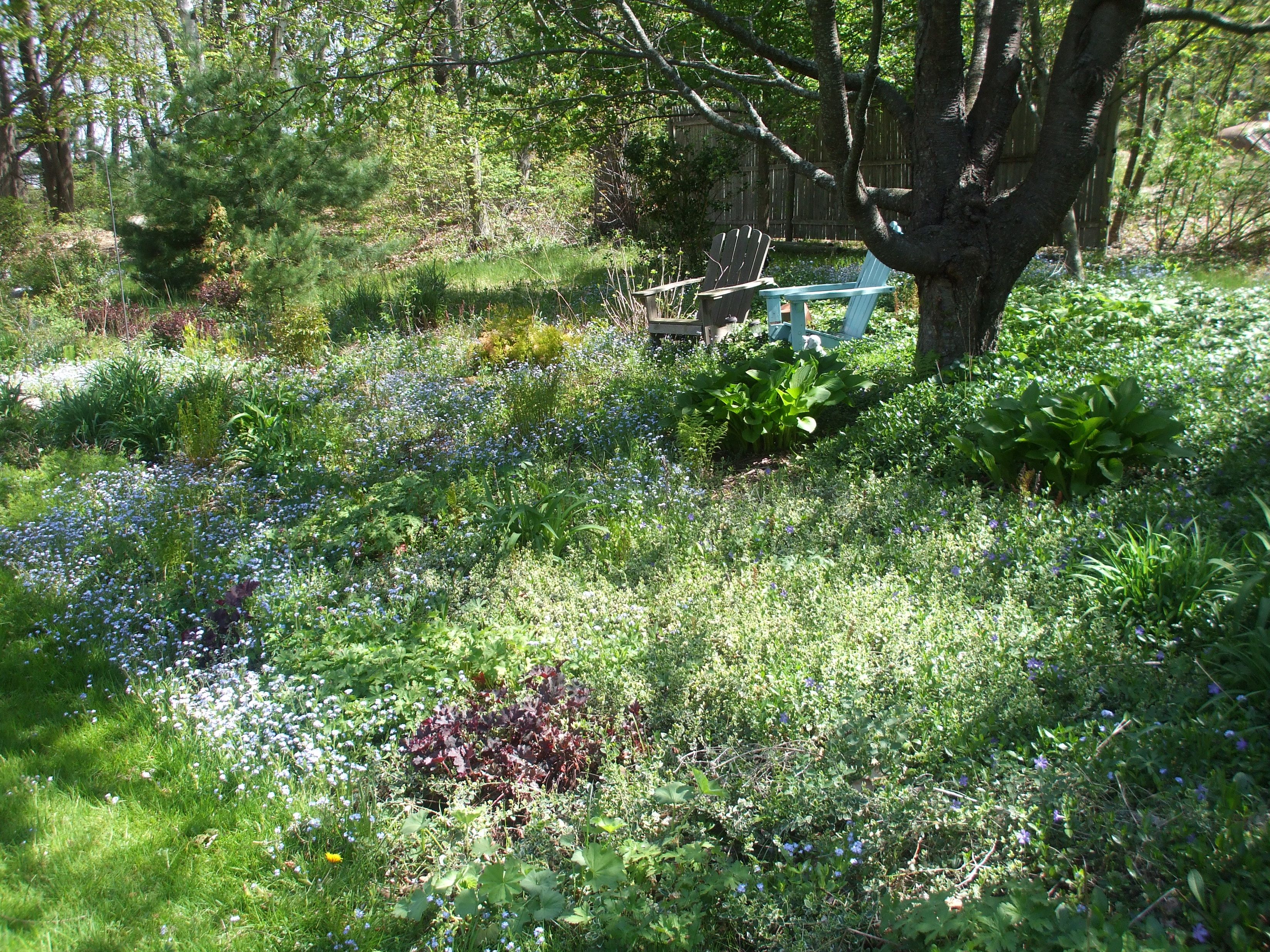
Here is a wide view of our back garden, painstakingly dug out of an established lawn.  It took a couple of seasons to remove all the grass, (which continues to fight its way back in). I love it best in spring when it is a sea of blues and greens, punctuated with a smattering of winey red.

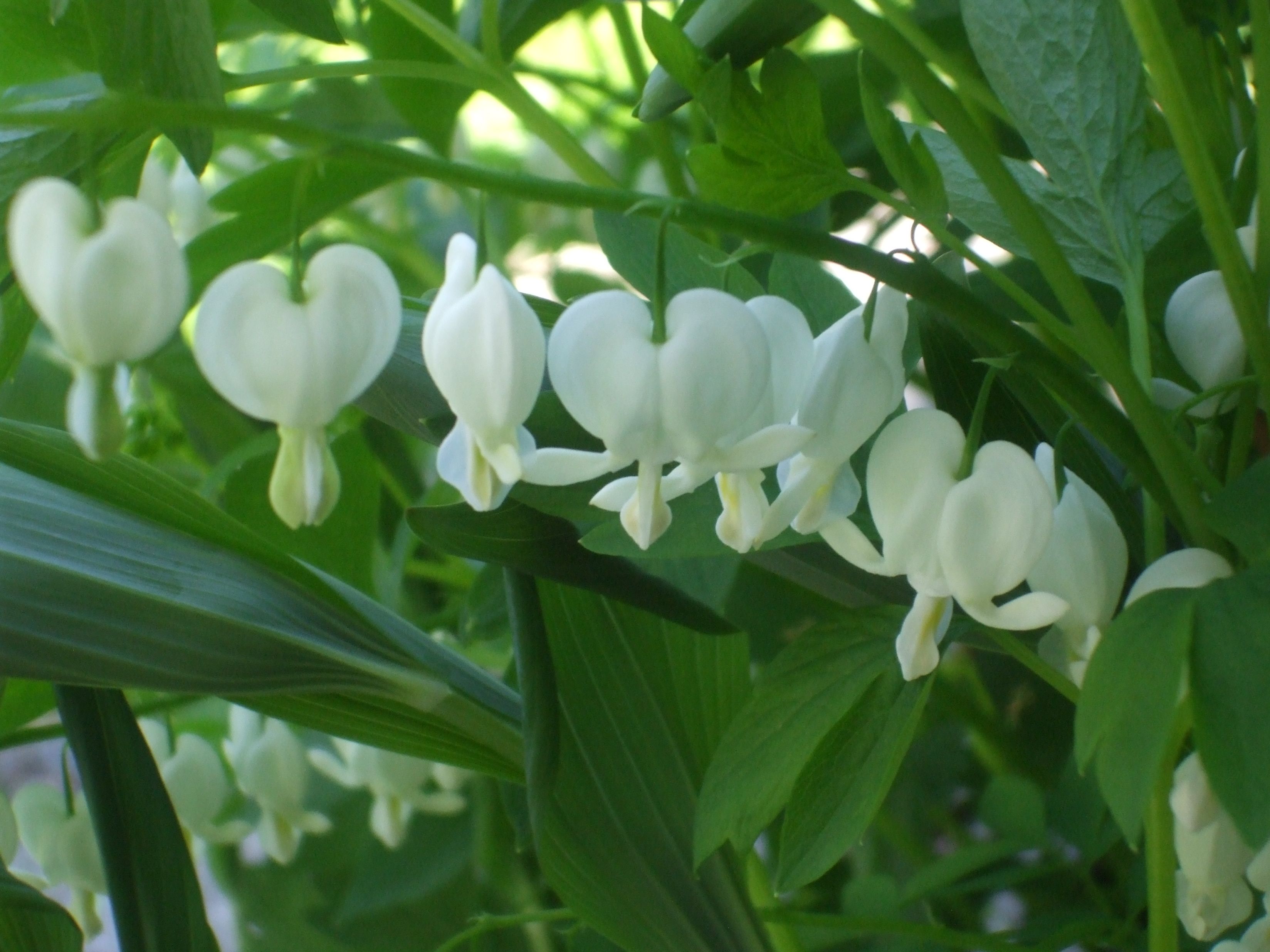
Just look at these Bleeding Hearts. Doesn’t their amazing shape and pure color make your own heart go pit-a-pat?

So many shades of ivory.

And here is some Solomon’s Seal getting ready to unfurl its string of pearls. These plants, along with some May Apple came from Marilyn, my neighbor at the Hawthorne Inn. These plants were already 50 years old when she first brought them down from Maine 35 years ago.

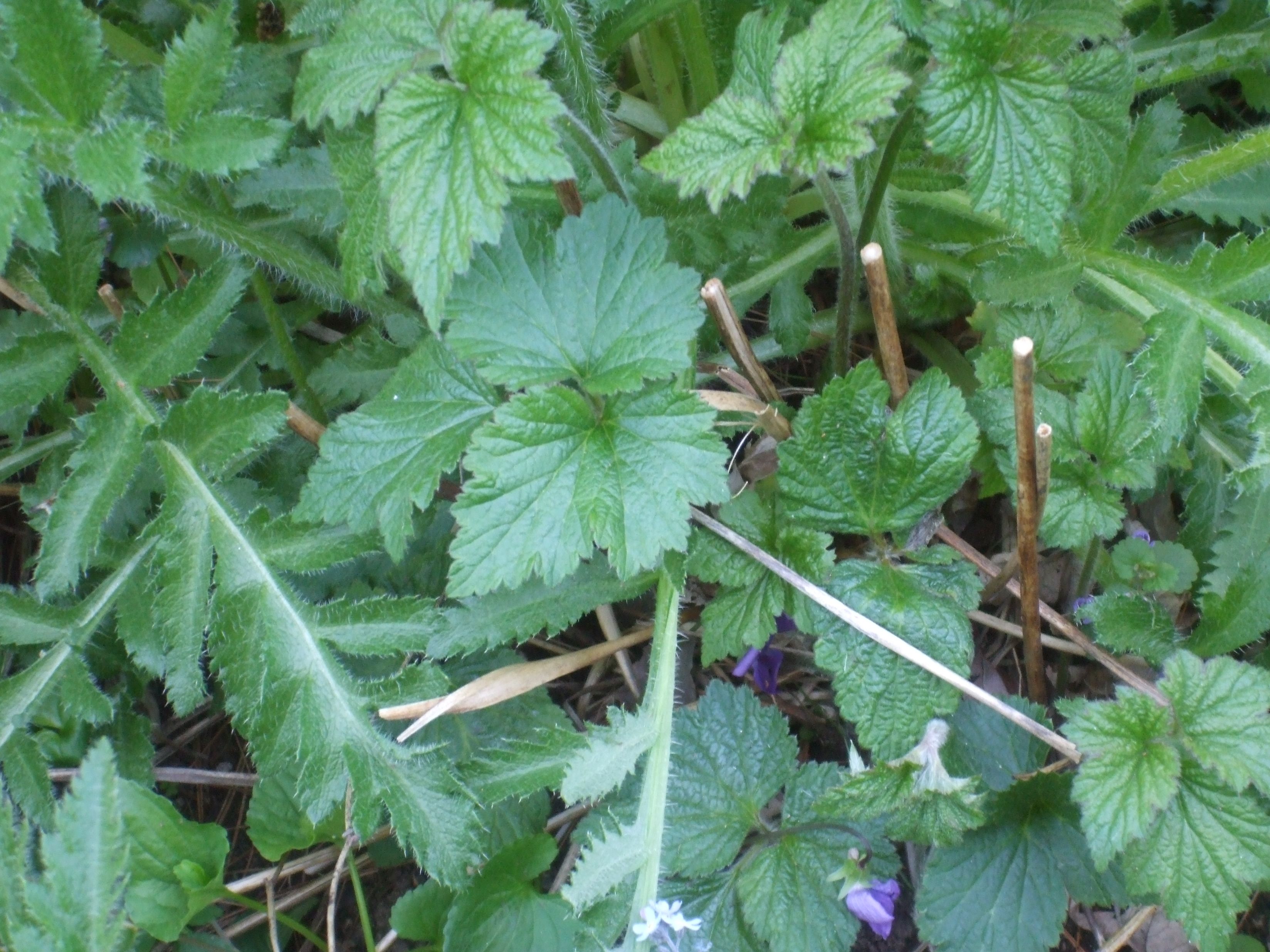
Oooh and there’s my Painted Fern! I always keep my fingers crossed that it will return each year.

The longer I’ve gardened, the more I’ve come to value the foliage as much as the flower. The leaves have to be interesting, because they are what you see for most of the growing season.

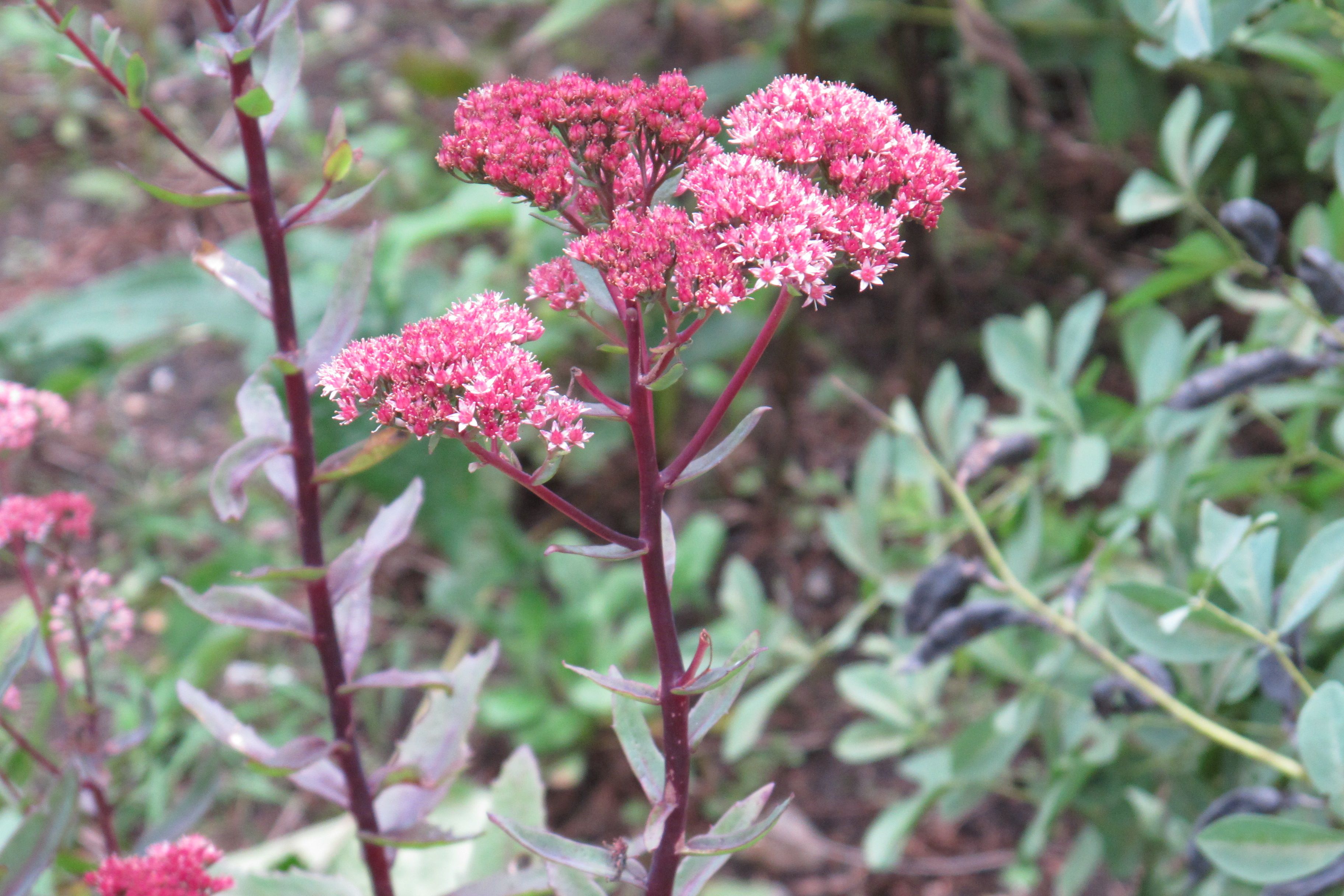
These Japanese Anemones are one example. They provide texture all summer. Then in the fall, they sprout their deep pink and white flowers. A lovely surprise when everything else in the garden has started to fade.

Lady’s Mantle leaves love to cup rainwater and dew, but they are experiencing an unusually dry spring. These plants came from Kathleen’s garden.

Like the Lady’s Mantle, this Yarrow from my friend Connie will eventually sport flat hats of yellow flowers. But it is already giving off its own musky scent. In fact, that aroma stopped me cold the first spring after I’d planted it, when I took it for a weed and almost pulled it out.

My friend Beverly, gardener extraordinaire, who lives in a little cottage down the street, shared some European Ginger with me a few years ago. It won’t bloom at all, but the sight of those crisp, shiny leaves can really cool you down on a hot day.

It’s so much easier to get stuck in the weeds/doldrums than it is to pull oneself out. But as any gardener knows, growing a garden takes persistance, care, and a bit of faith. You have to plant seeds, water, and pay attention. Eventually roots will form and something wonderful will emerge from the soil.

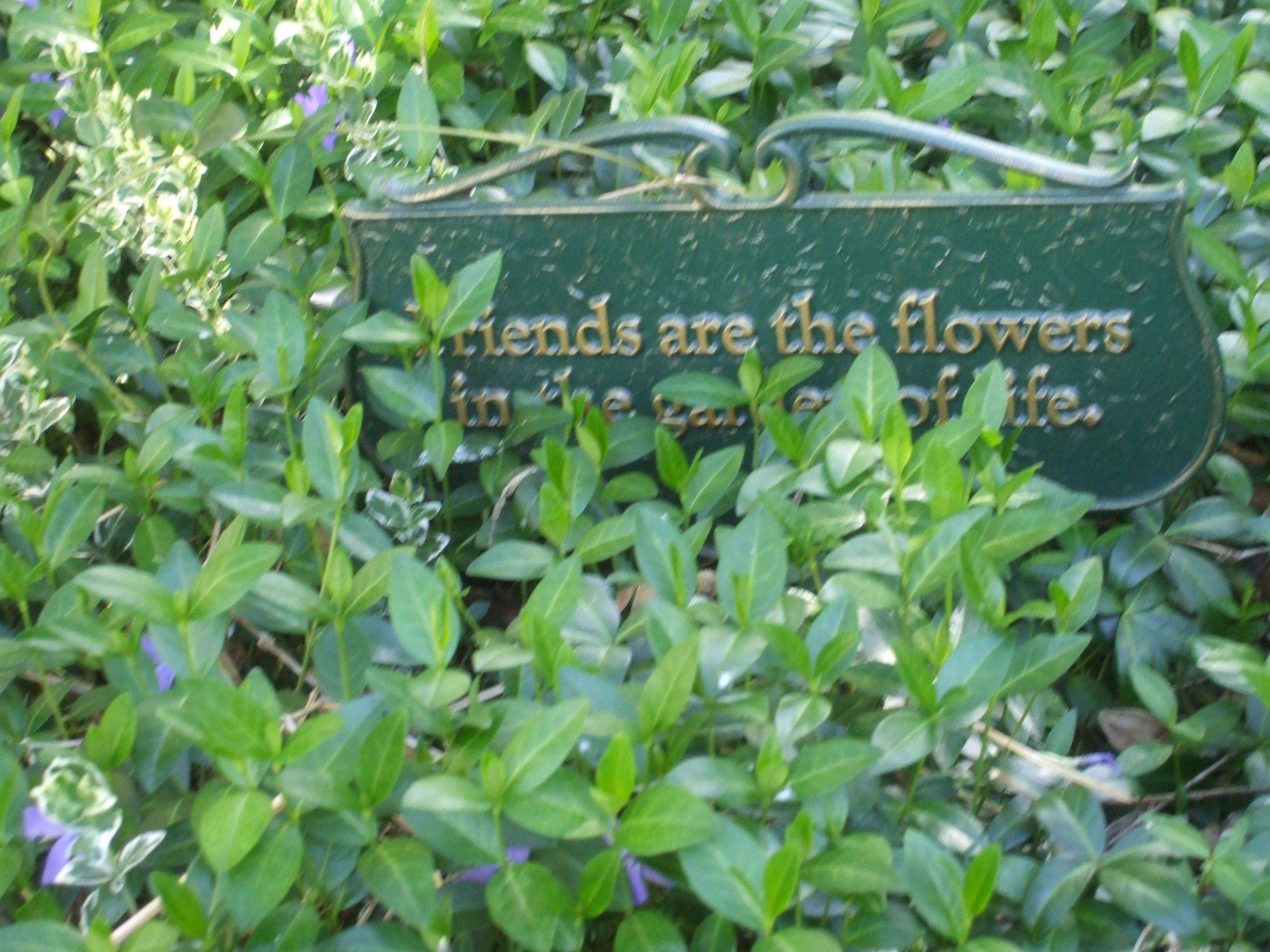
This sign is a gift from Carol, one of our oldest friends. Whenever I feel as though no one else gets me, she always does.

Is it Time to Disrupt Our Inner Climate?

23 Friday Mar 2012

Posted by judithar321 in adult children, aging, environment, inspiration, meditation, mid-life transition, pets

≈ 5 Comments

Tags

Dominique Browning, Moms Clean Air Force, personal growth, self-discovery, Seth Godin

It has been a week of changes here at our little homestead.

On Monday, our son Karsten left for his Peace Corps assignment. He will be living and working in Morocco for the next 27 months. He had been staying with us off and on since June, and was here full-time for his last six weeks in the states.

The house feels pretty empty. Not that he was loud or took up a ton of space, but his presence — the smell of his cooking; the sound of his voice as he practiced his Arabic; and the buzz of excitement as he greeted the dog every time he walked in the door — is suddenly gone.

Karina still listens for him, jumping up and barking every time a car door slams. One night Paul found her alone in the dark, at her favorite post, waiting for him to come home.

But our collective melancholy over Karsten’s departure is more than matched by our excitement for him and his new adventure, his new life.

Then it was Wednesday, my birthday.

And we were in the middle of a freakishly warm week. This photo of our back yard, taken on March 21, 2012 provides a snapshot of what Dominique Browning, cofounder and senior director of Moms Clean Air Force calls “climate disruption.”

First, we have chunks of our ancient willow trees littering our lawn. This was the work of Hurricane Irene, which severed an entire trunk of one tree last August, and the heavy snow from New England’s “Halloween snowstorm,” which brought down several large branches.

These trees are so old, they touch the sky.

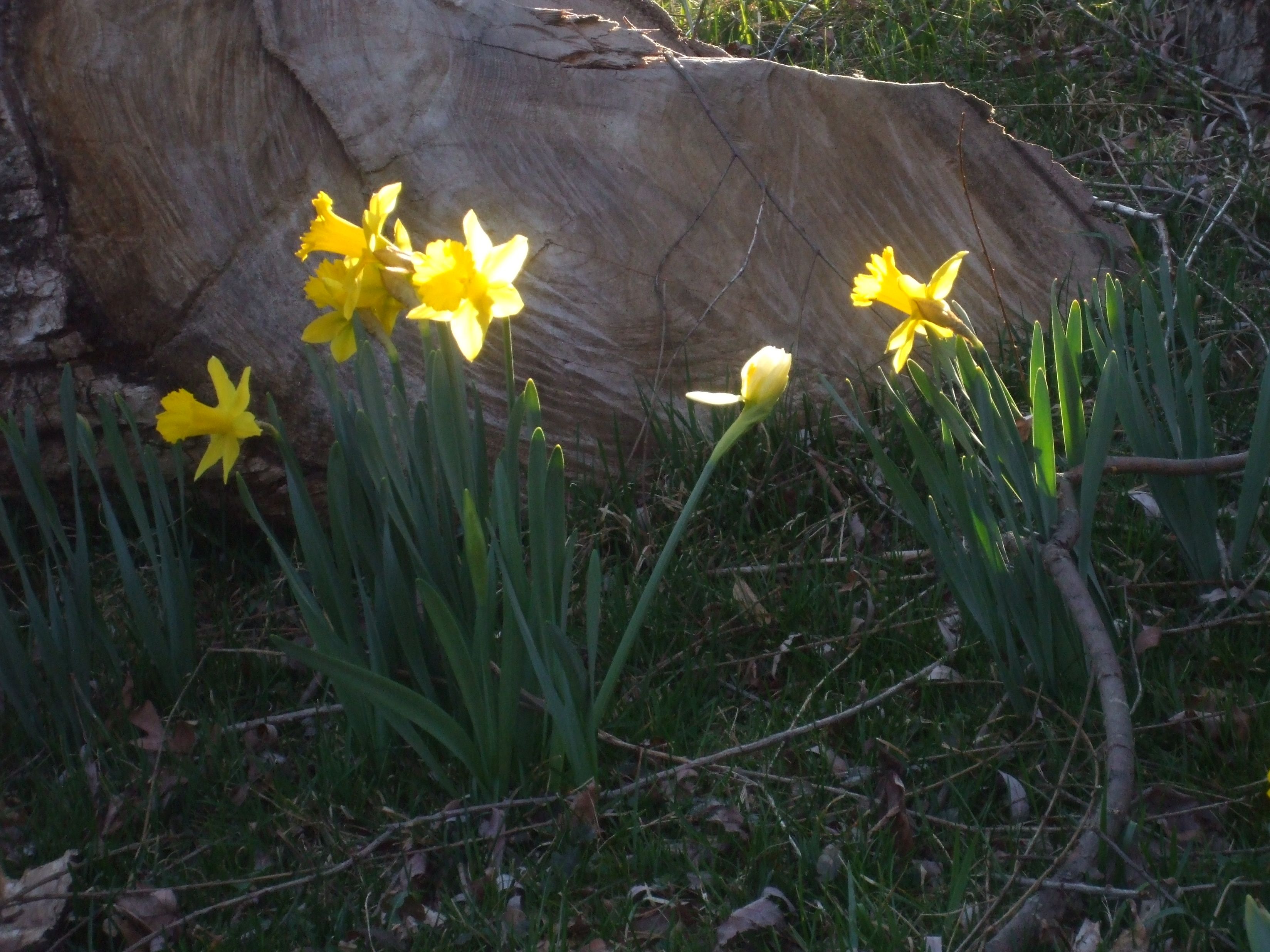
Then we have the daffodils. I was born within a day of the spring equinox, yet I don’t remember ever seeing daffodils bloom on my birthday.

Change inside. Change outside.

I was thinking about all of this when I woke up on Friday and opened my email to find this question from Seth Godin.

Did you wake up fresh today, a new start, a blank slate with resources and opportunities… or is today yet another day of living out the narrative you’ve been engaged in for years?

Funny, because with Paul’s semi-retirement, and both sons launched, and then this week re-launched, our conversations are full of ideas for changing our narrative as a couple. Where do we want to live? Where can we live? What work will we do? And what do we want to accomplish in the years ahead?

But Godin is talking about changes within ourselves, and I think his advice is particularly relevant for people who are in their fifties and sixties. As he observes,

The truth though, is that doing what you’ve been doing is going to get you what you’ve been getting. If the narrative is getting in the way, if the archetypes you’ve been modeling and the worldview you’ve been nursing no longer match the culture, the economy or your goals, something’s got to give.

… When patterns in engagements with the people around you become well-worn and ineffective, are they persistent because they have to be, or because the story demands it?

Change is everywhere. Change is hard. And creating internal climate disruption — re-examining old habits of perception and decision-making that persist because that is what we have always done — is the hardest change of all.

This isn’t about hunkering down for a session of self-blame or questioning every decision we have made since our 18th birthday. Not at all. It’s about opening the doors and windows of our mind, letting in fresh air and light, and viewing the world through a different lens.

Because when we clear away old baggage and take another look, we make room for new growth.

Inside a Potter’s Studio, a Daughter Finds Answers

08 Thursday Mar 2012

Posted by judithar321 in aging, art, friendship, health, inspiration

≈ 8 Comments

Tags

Elizabeth Cohen, friendship, grief, loss, motherless daughters, osteoporosis, Parkinson's disease, pottery

A few weeks ago I hung up the phone after a brief chat with my stepmother and burst into tears. “Why so sad?” I wondered.

About to enter her 89th year, and plagued by Parkinson’s disease, it makes sense that I would be sad after hearing her faint voice leak across the wires. But I sensed that this feeling of loss went much, much deeper.

Edith married my father two years after my mother died. I was nineteen years old, a college sophomore. Although I have grown fond of her as the years have passed, I greeted her arrival in my life with ambivalence.

She was in her early fifties when she met my father, and had never been married. As a result, she was completely clueless when it came to dealing with an angry, grieving teenager. We now get along just fine, and she has been a good grandmother to my children, but the deep well of loss I felt that day was not just for her.

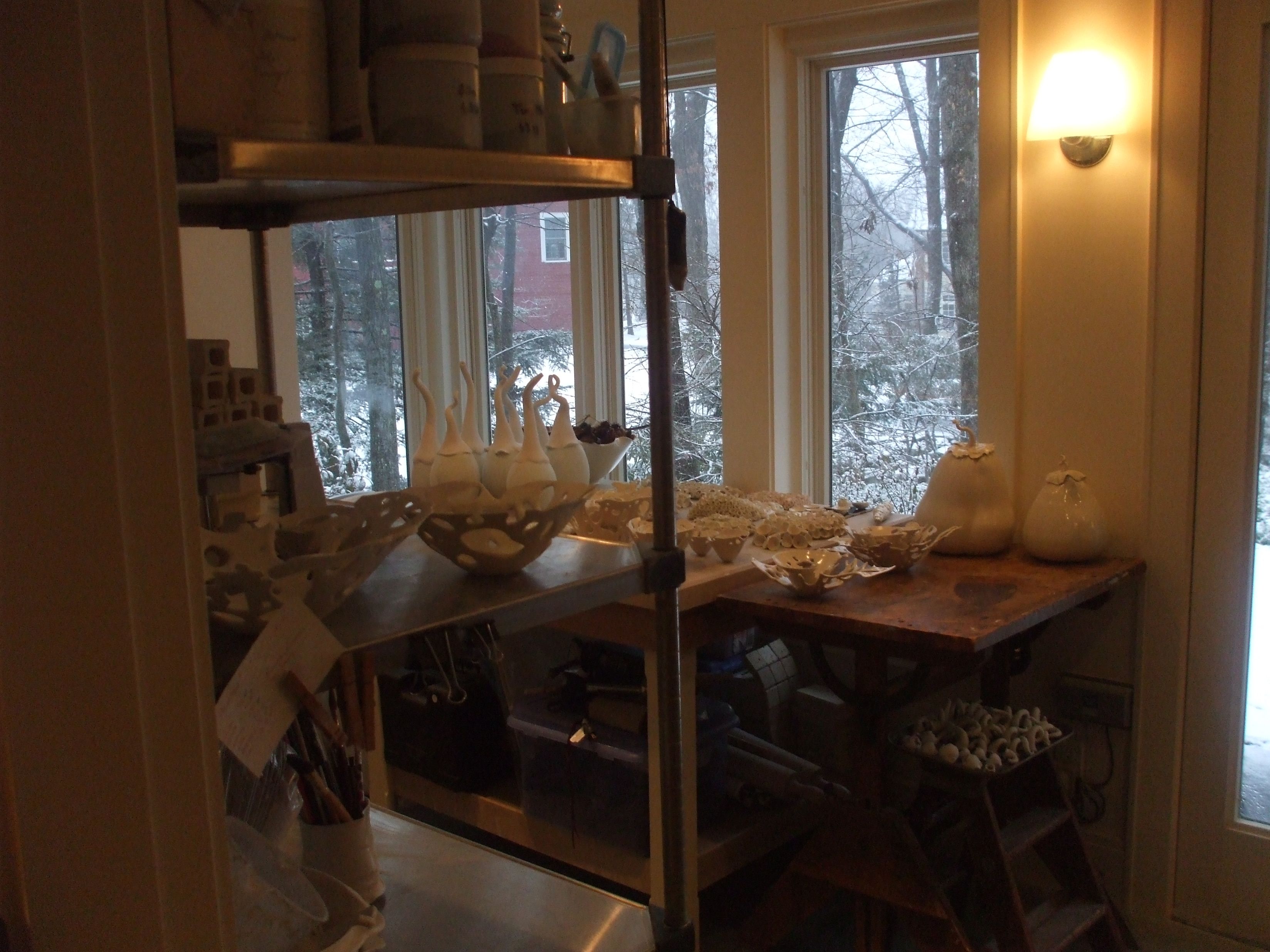
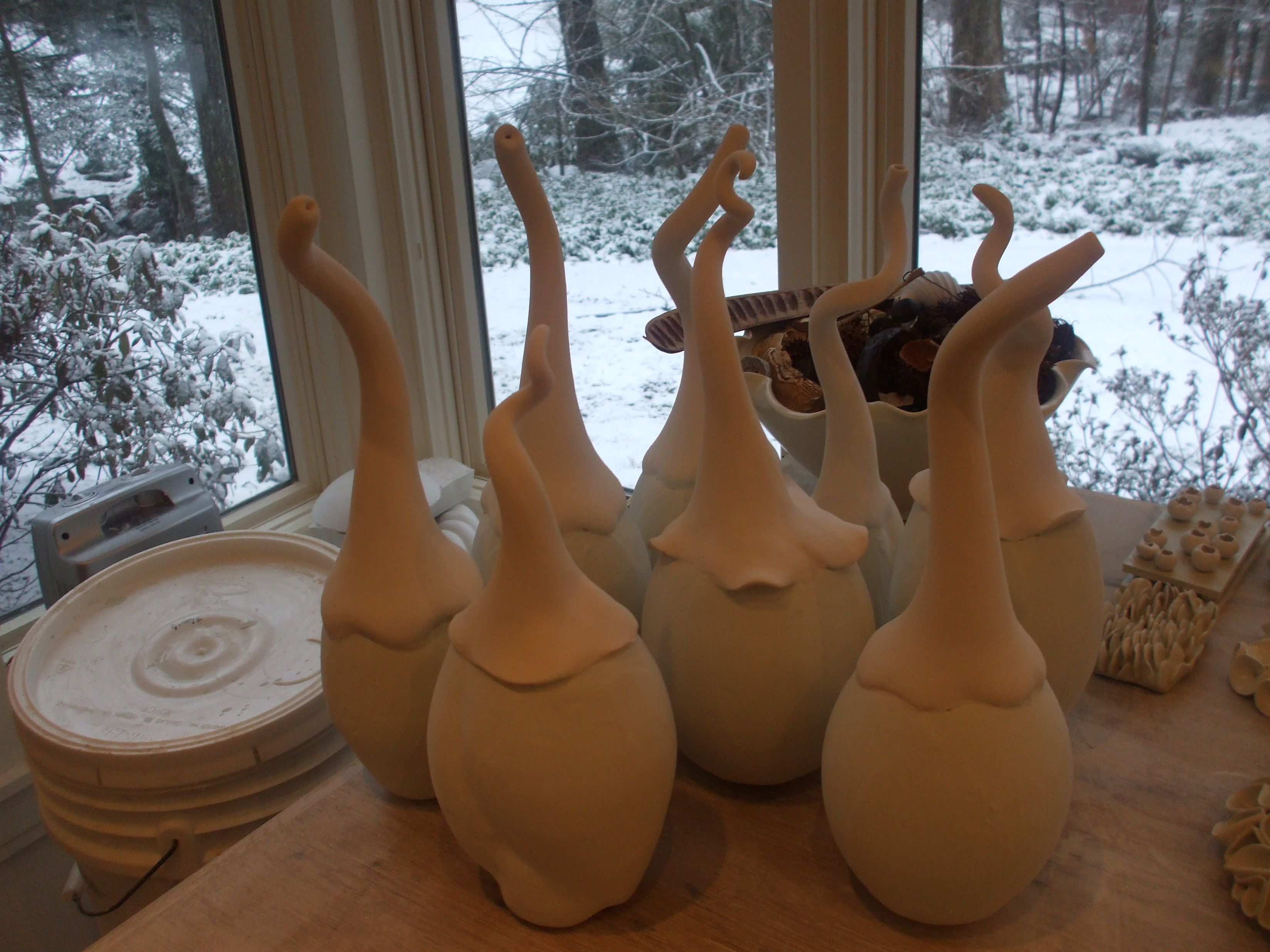
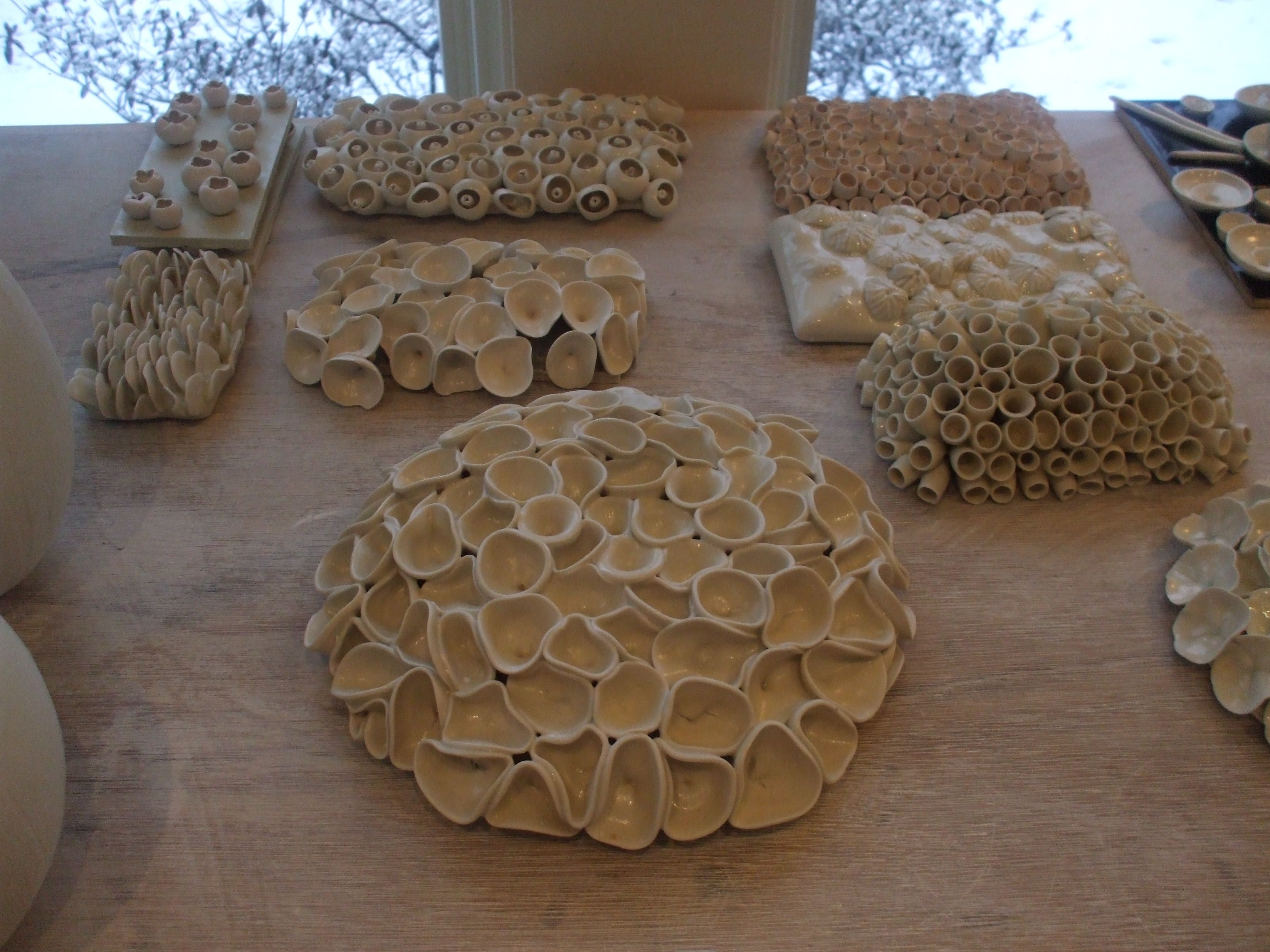
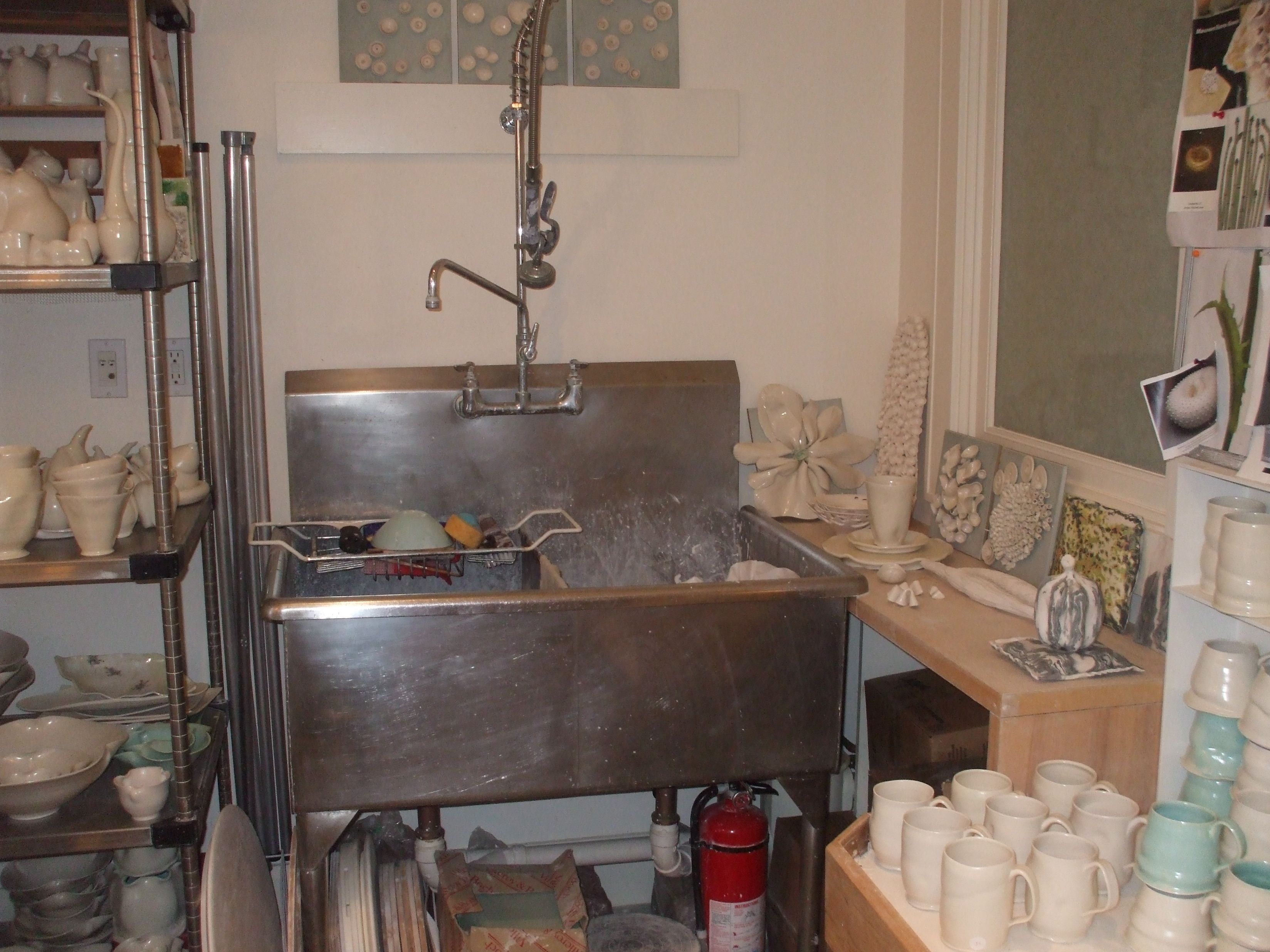
Then, on a wet, snowy Thursday, a new friend and I visited Elizabeth Cohen’s pottery studio.  Art was everywhere, beginning with her front steps.

These concrete leaves were made by another local artist.

Her studio was small, but held a multitude of porcelain objects in varying shades of cream, while just outside the window the falling snow whitened the air, the trees, and the ground,

Inside the kiln.

Her mugs mold themselves right into your hands.  I now own four of them.

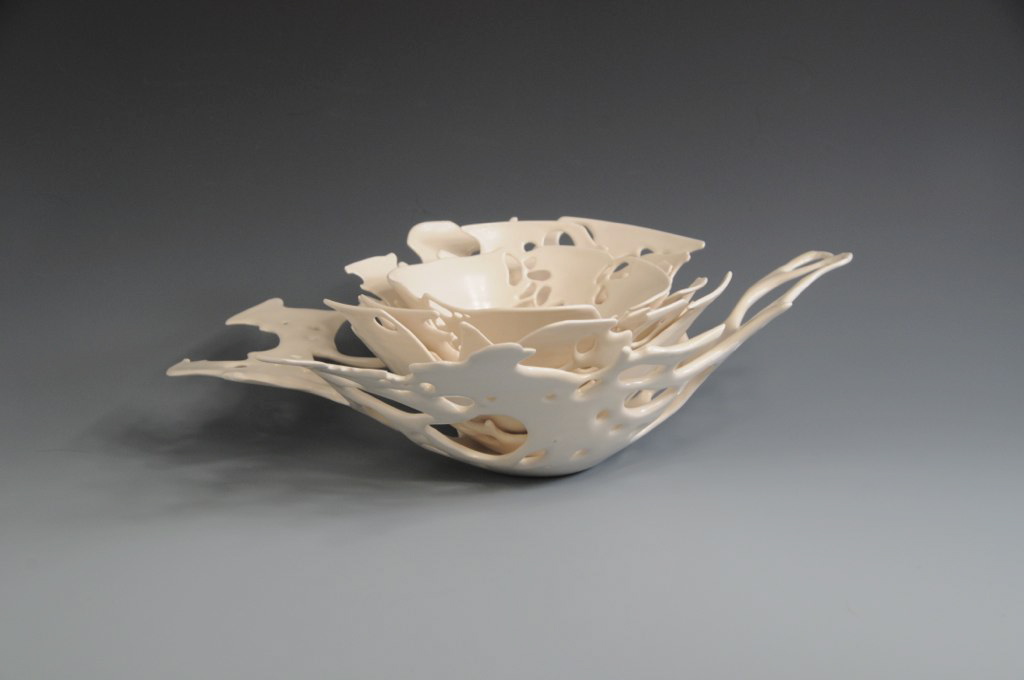
But the piece that struck me the most was a set of carved nesting bowls. It looked so fragile that I was afraid to touch it, even through my camera lens. Here’s a photo of it taken by Elizabeth.

© Elizabeth Cohen

The three of us paused over the piece while Elizabeth explained that her mother had died in the past year, and that these carved porcelain nesting bowls had been inspired by her aging bones. My friend, who is something of an expert when it comes to beautiful objects, seemed particularly taken by them.

As the snow ended, and the weekend came and went, I rolled the image of those bony bowls over and over in my mind. Eventually, it all came together, the sadness, the delicately carved porcelain — the smaller, more solid pieces nestled into the larger more porous ones.

It occurred to me, as it did when I married my husband, and birthed my children, that here was yet another event that I wouldn’t share with my mother. I’d never witness her body’s natural aging process — her bones becoming brittle, her hair turning white. She would again be absent, not there to show me the way. Indeed, I am already seven years older than she was when she died.

That’s one reason why watching my stepmother’s decline has awakened an old, old sadness. And yet, thinking back to my afternoon in that cozy studio, surrounded by white both inside and out, I know something else too.

I am not so alone. I was happy as I explored that creative nest, getting to know two other women: One my age, the other a bit younger, one who whips up confections with words, the other who does the same with clay.

I will miss my mother until the day I die, just as I’ll never stop looking for her in my family, friends, and in the new people I meet. She will be forever gone and gone too soon. But each layer of connection I make is like those bowls: I will cradle some, and others will cradle me.

Together, we will all find our way.

Newer posts →
A blog about travels near and far, daily life, and issues that are bigger than all of us.

Recent Posts

  • Intentions
  • From Concord to Concordia: A Late-Life Migration
  • Dear Mr. President, Please Don’t Extinguish My Energy Star
  • I Vote for Clean Air
  • Love at Last

Enter your email address to follow this blog and receive notifications of new posts by email.

Join 196 other subscribers

Blogroll

  • 3191 Miles Apart
  • 66 Square Feet
  • Athenas Head
  • econesting
  • Food and Fiction
  • Lost in Arles
  • Second Lives Club
  • Slow Love Life

Places my work appears

  • Center for Effective Philanthropy
  • Harvard Business Publishing
  • Moms Clean Air Force
  • Talking Writing
  • Women's Voices for Change

Archives

  • August 2017
  • May 2017
  • March 2017
  • October 2016
  • February 2016
  • December 2015
  • November 2015
  • July 2015
  • June 2015
  • April 2015
  • March 2015
  • February 2015
  • December 2014
  • November 2014
  • October 2014
  • July 2014
  • June 2014
  • May 2014
  • April 2014
  • March 2014
  • February 2014
  • January 2014
  • December 2013
  • November 2013
  • October 2013
  • September 2013
  • August 2013
  • July 2013
  • June 2013
  • May 2013
  • April 2013
  • March 2013
  • February 2013
  • January 2013
  • December 2012
  • November 2012
  • October 2012
  • September 2012
  • August 2012
  • July 2012
  • June 2012
  • May 2012
  • April 2012
  • March 2012
  • February 2012
  • January 2012

Categories

  • adult children
  • aging
  • art
  • books
  • discipline
  • environment
  • friendship
  • health
  • inspiration
  • marriage
  • meditation
  • mid-life transition
  • music
  • pets
  • politics
  • travel
  • uncategorized
  • work
  • writing

Twitter

Tweets by judithaross

Create a free website or blog at WordPress.com.

Privacy & Cookies: This site uses cookies. By continuing to use this website, you agree to their use.
To find out more, including how to control cookies, see here: Cookie Policy
  • Subscribe Subscribed
    • Shifting Gears
    • Join 196 other subscribers
    • Already have a WordPress.com account? Log in now.
    • Shifting Gears
    • Subscribe Subscribed
    • Sign up
    • Log in
    • Report this content
    • View site in Reader
    • Manage subscriptions
    • Collapse this bar
 

Loading Comments...