Inspired by Older Women

Tags

, , , , , , ,

Women who are in their sixties and older have been on my mind lately. While I have a few years before my own 60th birthday, I’m noticing that late middle-age/ early old age can be one of the most powerful and vibrant times in a woman’s life.

It started at a Patty Larkin concert that took place right here in Concord. I’ve listened to her music for years, but I’d never seen her in person.

If you’d asked me to describe her voice, I’d have told you that it has a smile in it. And after seeing her play, I can now say that, in fact, she does smile when she sings.

From where I sat, Larkin looked and sounded like a woman in her early forties. Her body is toned, and her smooth, youthful voice reveals none of the wear and tear that often comes with time. And the inventive way she noodled around on her electric guitar reminded me of my 29-year-old son, who plays and composes experimental music.

“How old do you think she is?” I asked my husband during intermission. He pulled out his smartphone and looked her up. “Sixty-one,” he told me. Really? Wow.

Close up she may not look quite as young as she does from afar, but the vibrancy and joy she exudes while performing is that of an artist at the height of her powers.

A few weeks later, another powerful, older woman came across my radar. I reviewed Lilly Ledbetter’s memoir, Grace and Grit: My Fight for Equal Pay and Fairness at Goodyear and Beyond.

After 19 years as a supervisor, Ledbetter learned that Goodyear was paying her significantly less than her male counterparts. She took her battle for fair pay all the way to the Supreme Court.

The court decided against her, ruling that the statute of limitations had run out on her claim. She lost her personal battle, but she had the guts (and grit) to persevere so that the rest of us wouldn’t be treated in the same way.

In one of his first official actions as President, Obama signed the Lilly Ledbetter Fair Pay Restoration Act, which provides a more reasonable time limit for such claims. Now in her early 70s, Ledbetter went from the factory floor, to testify before Congress.

While reading Ledbetter’s memoir — which I could barely put down—I was reminded of how filthy factory work is (I welded electronic bug zappers during college), and of the gauntlet many women must run when they work with men who are unable to check their sexual urges at the workplace door.

Ledbetter isn’t an artist, nor is she a glamorous celebrity (though she’s both eloquent and elegant in words and appearance), but a regular person who grew up in poverty, worked grueling hours to help support her family,  and then became a spokeswoman for us all. She is forever on my list of inspirational women.

Then last week, at another event in town, I heard historian Doris Kearns Goodwin, 69, and photographer Annie Leibovitz, 62, discuss Leibovitz’s latest project, “Pilgrimage,” which is currently on exhibit at the Concord Museum.

These two smart, articulate women shared personal stories filled with self-deprecating humor. And while Goodwin awakened my somewhat dormant interest in history, my focus was on Leibovitz.

“Pilgrimage” is a photographic study of places and the personal effects, work, and surroundings of several historical figures. Some of them, Thoreau, Emerson, and Louisa May Alcott once lived here in Concord.

Leibovitz began the project during a difficult time in her own life. She needed to do something that wasn’t an editor’s assignment, but that was instead self-driven and that satisfied her own interests and curiousity. In healing herself, she did what many of us do —what I do when I’m overwhelmed, sad, or in a rut — she shifted gears and focused on the minutiae.

While I might weed the garden, detail the house, or start a cooking project, Leibovitz focused her camera on the light outside Emerson’s window, the beat-up surface of Virginia Woolf’s desk, and Georgia O’Keefe’s box of handmade pastels.

Both Leibovitz and Goodwin agreed that it is these kinds of details that make the person come alive. Later, as I walked through the exhibit past photographs of Annie Oakley’s riding boots, Marion Anderson’s concert gown, and the top edge of Eleanor Roosevelt’s desk drawer, etched with her signature, they came alive for me too.

Rather than becoming diminished as they age, these women are only getting stronger. I have heard women my own age complain that they feel invisible. With no regular job and an empty nest, I occasionally feel this way too.

Women like these show us that we don’t have to fade away.  If we keep working, doing, and learning, we can be better, we can do more.

I leave you with another video of Patty Larkin. Check out the way she works that electric guitar with her bow.

Where Do Ideas Come From?

Tags

, , , , , , , , ,

My fascination with creativity started at our kitchen table, where I’d sit across from my grandfather, both of us drawing. One day, while I worked with my pencil and crayons, he painted a landscape on the back of an old shirt box. I don’t know what happened to it, but I still have this one that he painted on canvas.

Painting by Jacob Scheinfein

Back then all I cared about was my inability to make “realistic” drawings. Too bad he didn’t tell me (or maybe he did and I don’t remember) that making art is much more about perseverance and hard work than it is about innate talent and inspiration.

As artist Chuck Close says, “ Inspiration is for amateurs; the rest of us just show up and get to work.”

Practice may not always make perfect, but it does put you on the road to creation. It helps you figure out what you like to do and helps you develop skills and goals. If my grandfather were alive today, I’d ask him, Why that house, those mountains, that tree? Does the scene on canvas match the one in your head? Was there a message behind it? What were you thinking about when you took out your paints and got to work? What was your intention?

A few weeks ago, this video of designer Karin Eriksson at work in her pottery studio, captured my attention. In it, Eriksson seems both deliberate and intentional as she measures out her lump of clay, places it on her wheel, and goes to work. She knows what form she wants that lump of clay to take and how to get it there.

In this case, I’m guessing, the form is already designed — we don’t see if any “rejects” or “seconds” come out of her kiln — and so this video is about process and control, not about what went on in her head when she made the prototype for these pieces. Perhaps this work was executed exactly as planned, but it also may be the result of trial and error or happy accident.

For photographer Sally Mann, accidents are part of the plan. She captures her images using old cameras, faulty lenses, and prints them using the wet-plate collodion process. The resulting photographs have streaks, dust spots, and other “imperfections.” She likes the element of the unexpected that her process engenders. As she says in this clip, “I feel I’m at the whim of the angel of chance because all these wonderful things happen on the plates.”

Last year, when I interviewed artist Sophia Ainslie, she said that in some of her work, “… accident was an important part of the process.” But even when your goal is specificity and deliberation, you have to work with mistakes, “If the mark happens to be in the wrong place—whatever that may mean—,” Ainslie told me, “then you’ve got to run with it and make it right.”

When putting my own ideas down on paper — as opposed to writing up an interview, for example — I may have a broad sense of what I want to say, a tiny kernel of an idea, or even just a feeling to build on, and the bulk of the piece comes while I’m writing  and rewriting it. As Chuck Close suggests, I often don’t discover where I’m going until I get to work.

Sometimes I’m hit by that hyperbolic “bolt of lightening” that puts me in “the zone,” and the words seem to flow of their own accord. But that rarely happens.

The other morning my friend Kathleen told me that she has so many ideas that she is having a hard time settling on a direction for an upcoming show. Then the next day she reported that she’d just spent a whole day working on a new piece only to be disappointed with the outcome.
I tried to remind her that this always happens when she’s starting a project. And then I joked that as a writer, when I’m not satisfied, I can just hit the “delete” button. She didn’t laugh. For artists, the cost of rebooting is much more than frustration and dejection — the materials they use are expensive.

Here is some of her work-in- progress.

Photo and artwork by Kathleen Volp

In their tiny gem of a book, Art & Fear: Observations on the Perils (and Rewards) of Artmaking David Bayles & Ted Orland caution that, “The function of the overwhelming majority of your artwork is simply to teach you how to make the small fraction of your artwork that soars. One of the basic and difficult lessons every artist must learn is that even the failed pieces are essential.”

Frustrating but true for all of us, whether we express ourselves through music, words, or images. As Kathleen says, “It’s all about bringing your own voice to your work. You have to be clear and be true to that voice.”

Doing so is hard work. It is painful, messy, and frustrating. But it is also satisfying, affirming, and just plain wonderful.

So, artists, photographers, writers, musicians and bloggers, 

  • Where do your ideas come from?
  • How much of your creation is about controlling your medium and how much is about overcoming obstacles and setting yourself free?

Discuss!

Karina’s Walk

Tags

, , , , , ,

When I wasn’t working at the store this week, I was writing a book review and a piece on air pollution.

And then there was that password-protected Father’s Day tribute. Sorry, but I didn’t want to  a.) gross you out with my sentimentality or b.) bore you with cute pictures of my kids, who most of you don’t even know. But husband loved it and that’s what counts.

Just so you don’t think I’m lying about all the busyness, here I am at my retail job. See? Busy, busy, busy.

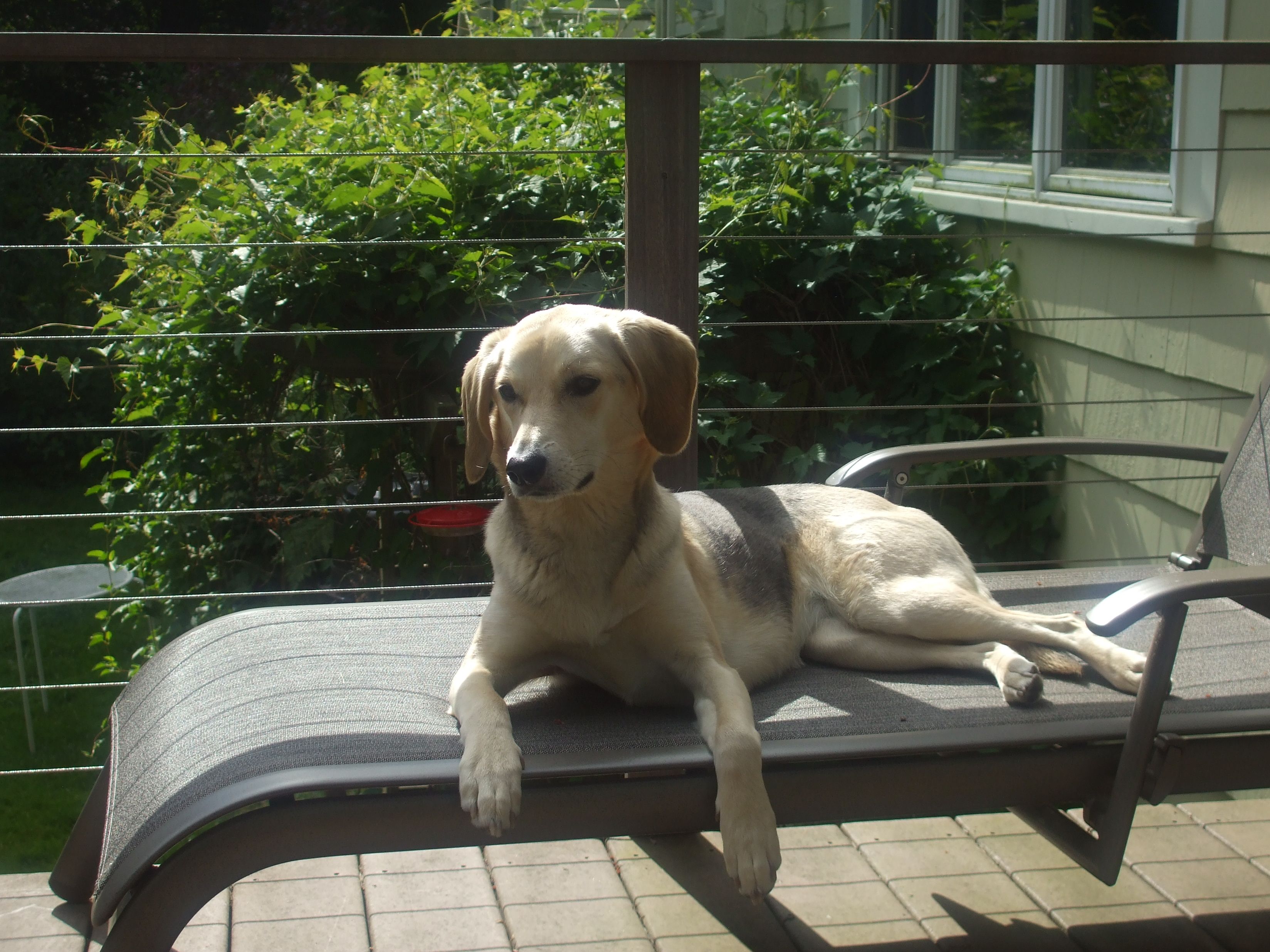
Anyway, because I didn’t have time to write a post this week, Karina has graciously agreed to give you a tour of “her” woods.

Click on the arrow and she’ll lead you in.

Inside Sakonnet Garden

Tags

, , ,

Before this week of rain I’d been putting some hard labor into our back garden, digging up ferns with root systems that were crowding out other, more delicate plants. Husband pitched in too. Not one to mess around, he made short work of the ferns using a hand axe.

As a reward for my labors and to seek a bit of inspiration, I joined my friend Cheryl in Little Compton, Rhode Island, where we visited Sakonnet Garden.

While it was cloudy and drizzling when I left Concord, the weather in Little Compton featured clear blue skies and a warm sun.

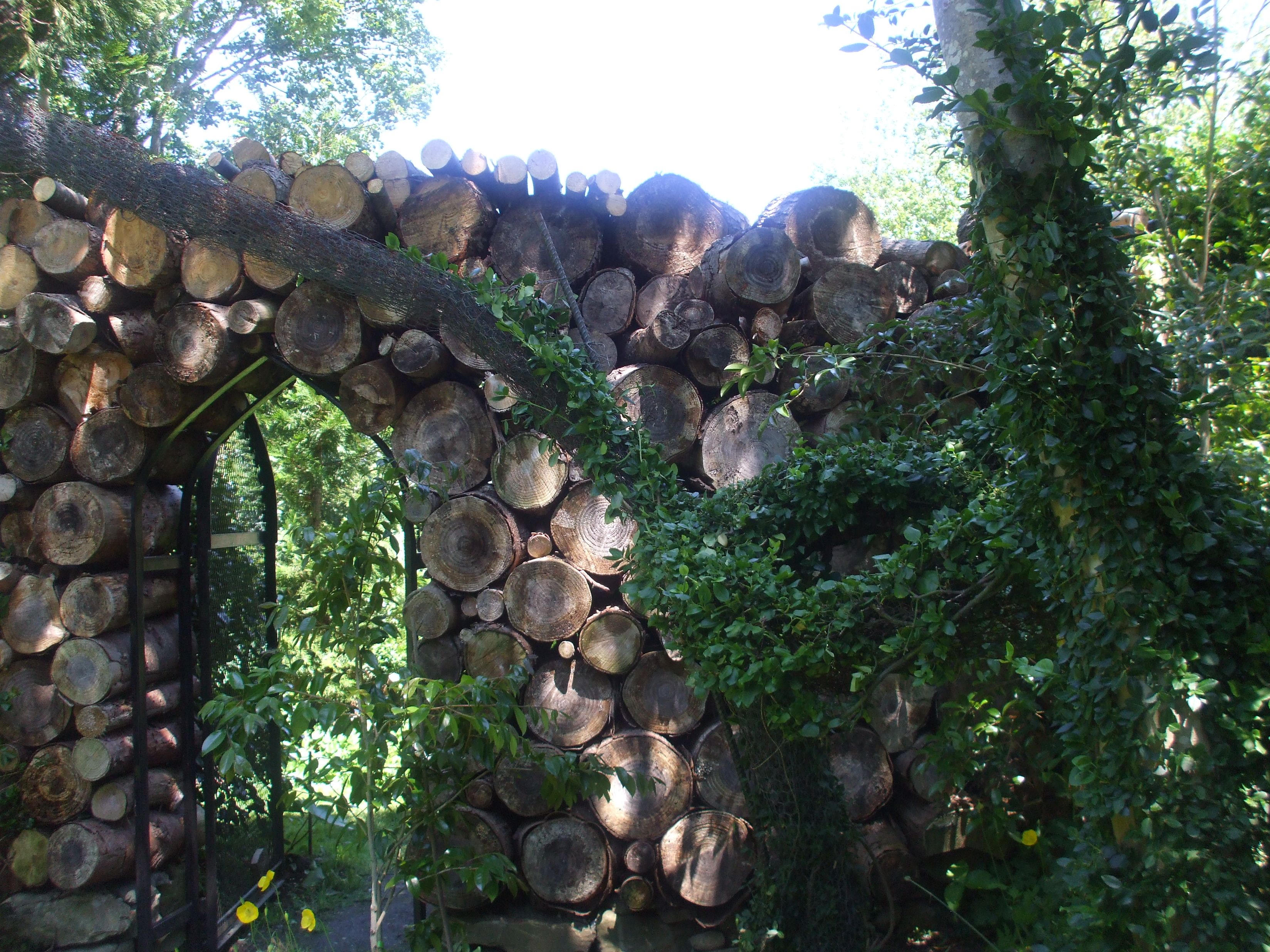
The two of us wandered through a series of garden rooms, chatting and taking pictures. Sakonnet garden is like a well-designed house.

There are a variety of ceiling heights. You enter down a long “hallway” and then feel a sense of release as you enter the first room.

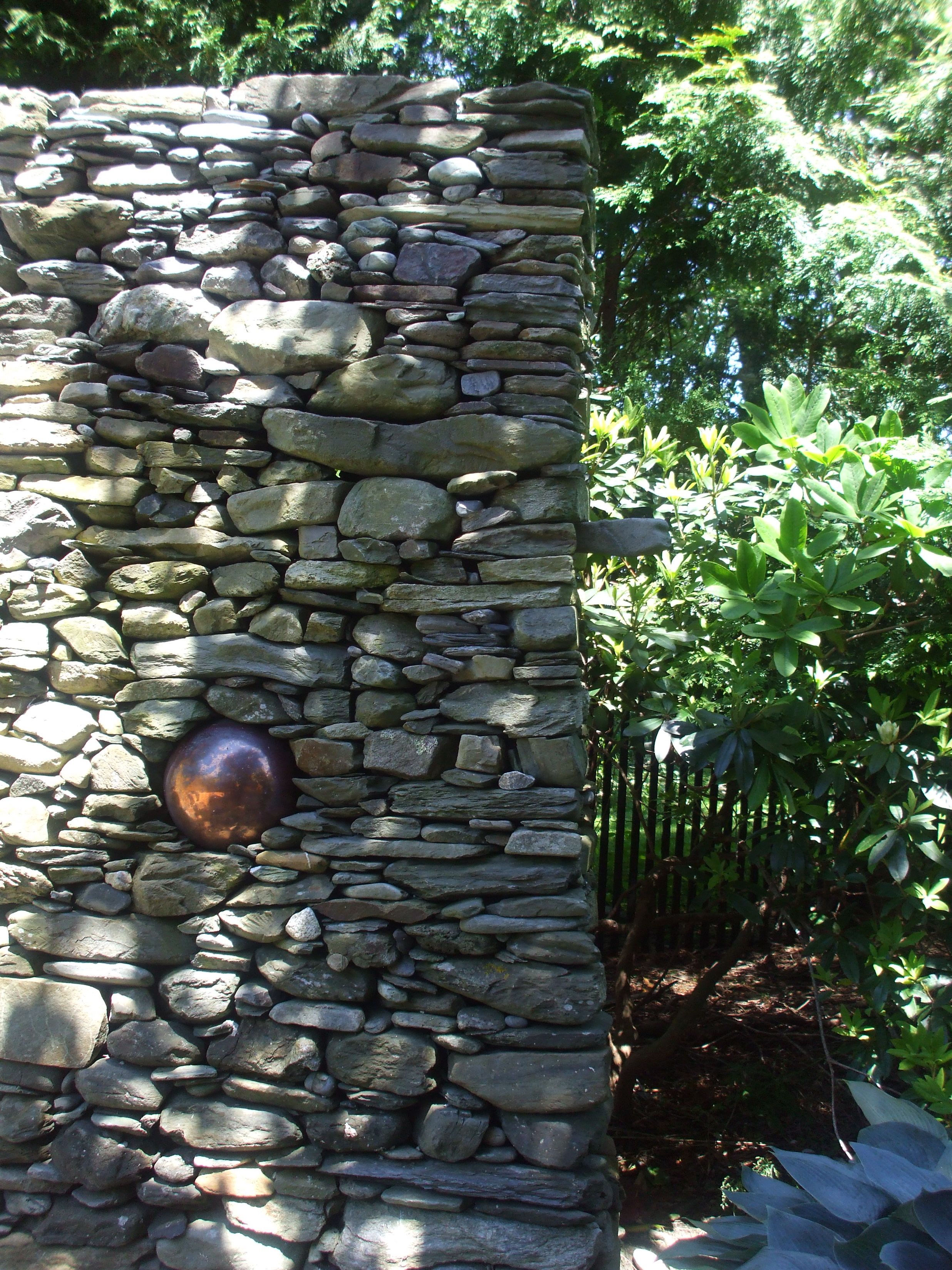
There are a variety of wall treatments

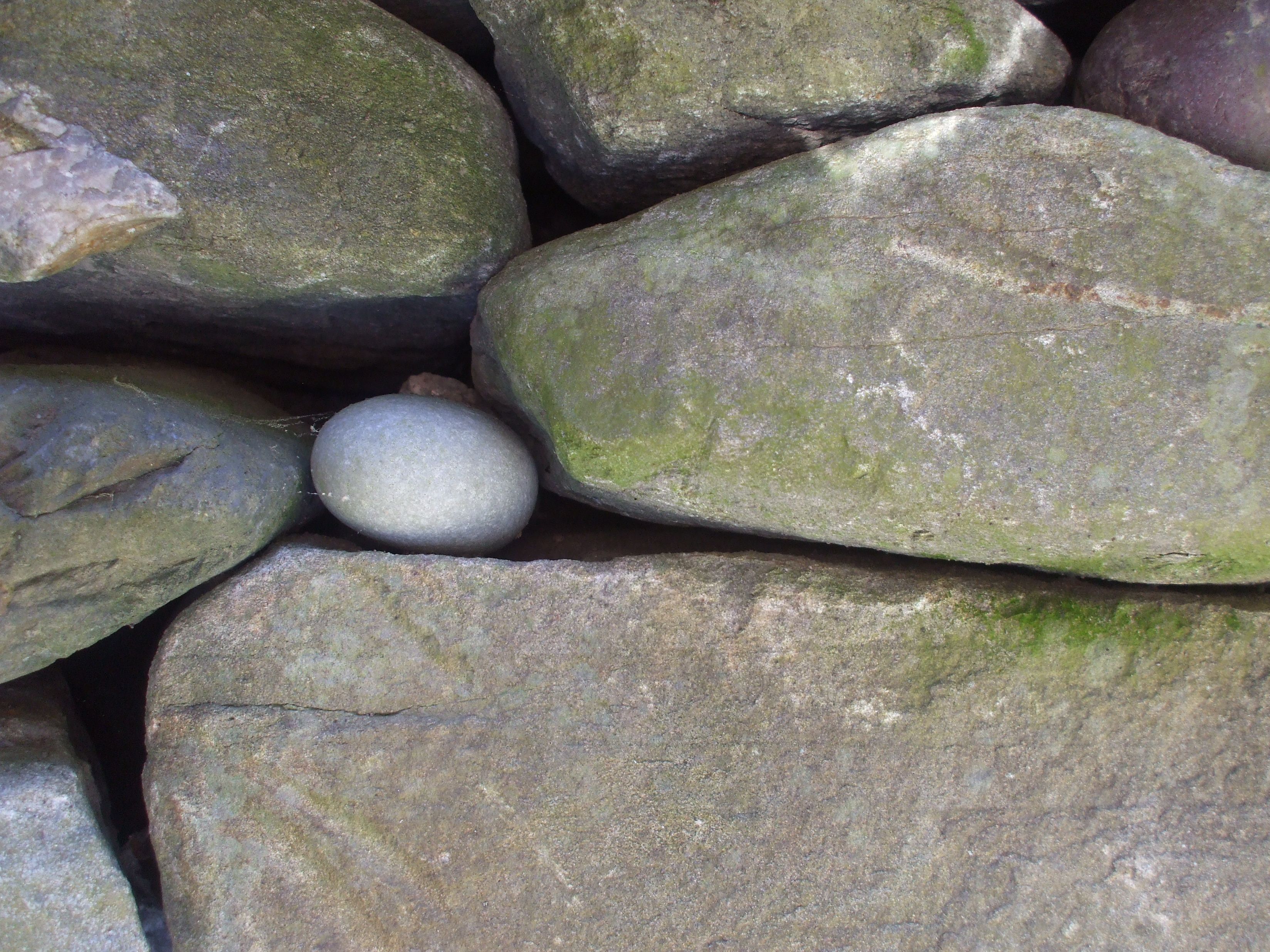
And they’ve furnished the place using a wide array of textures

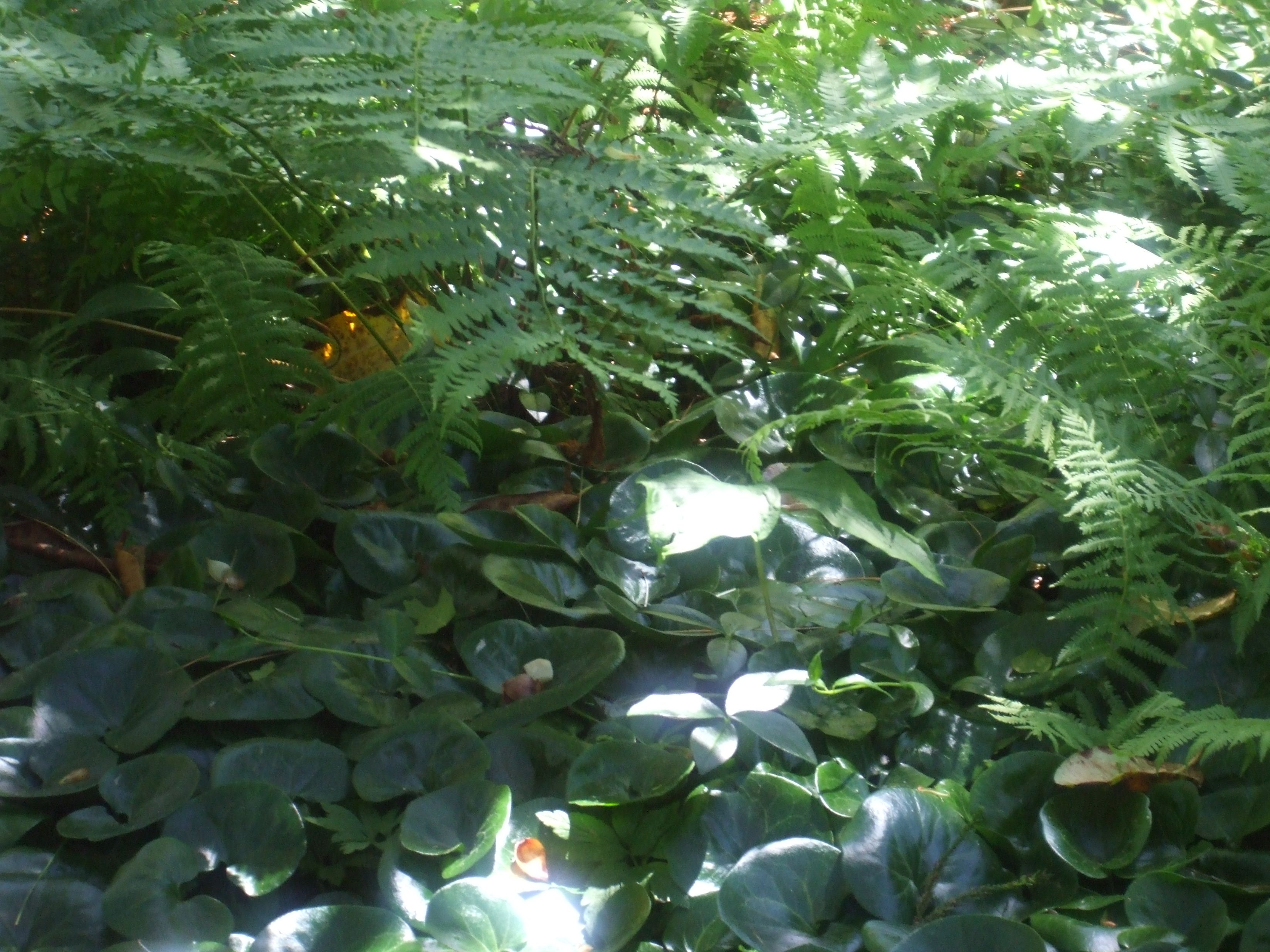
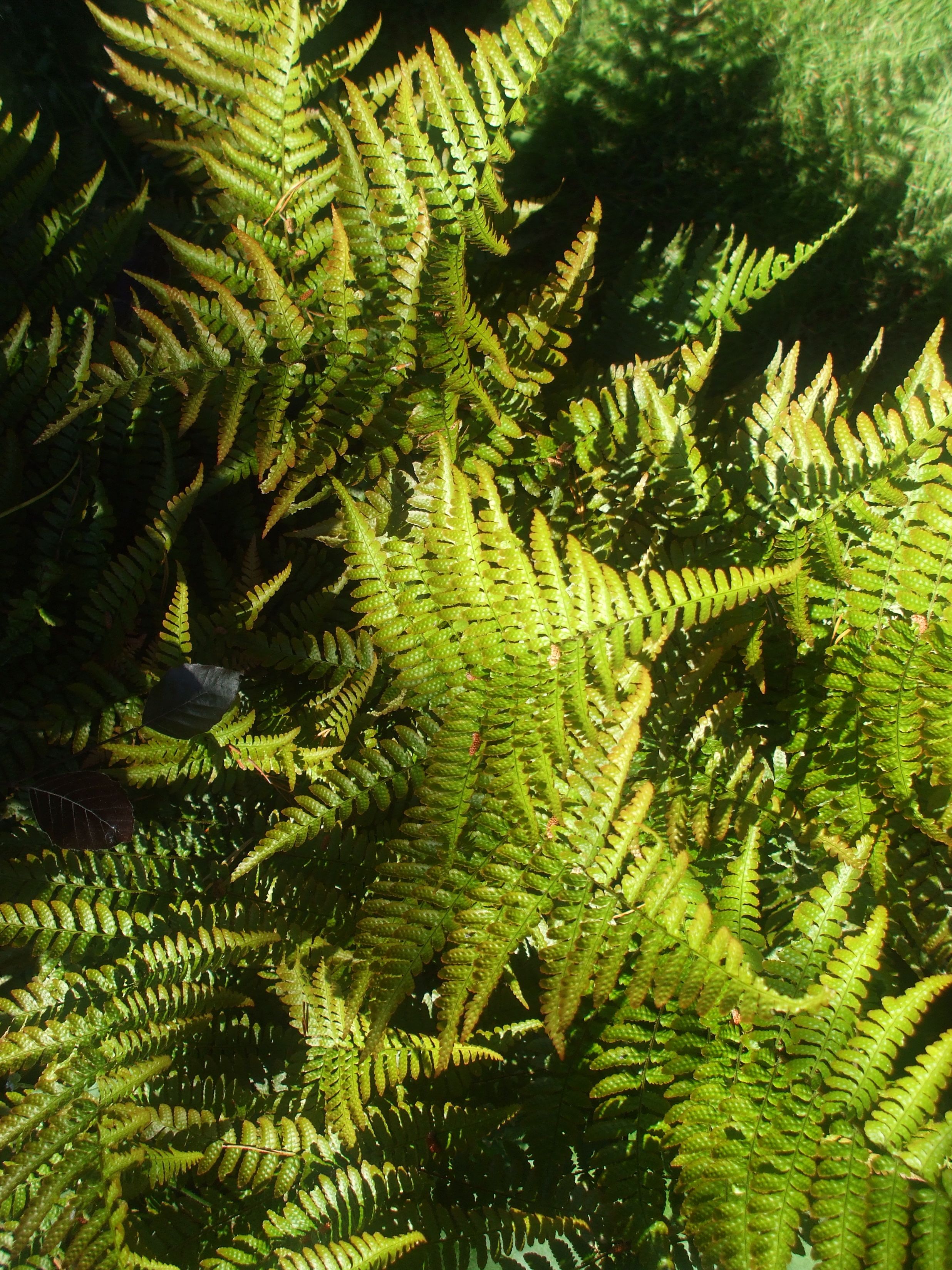
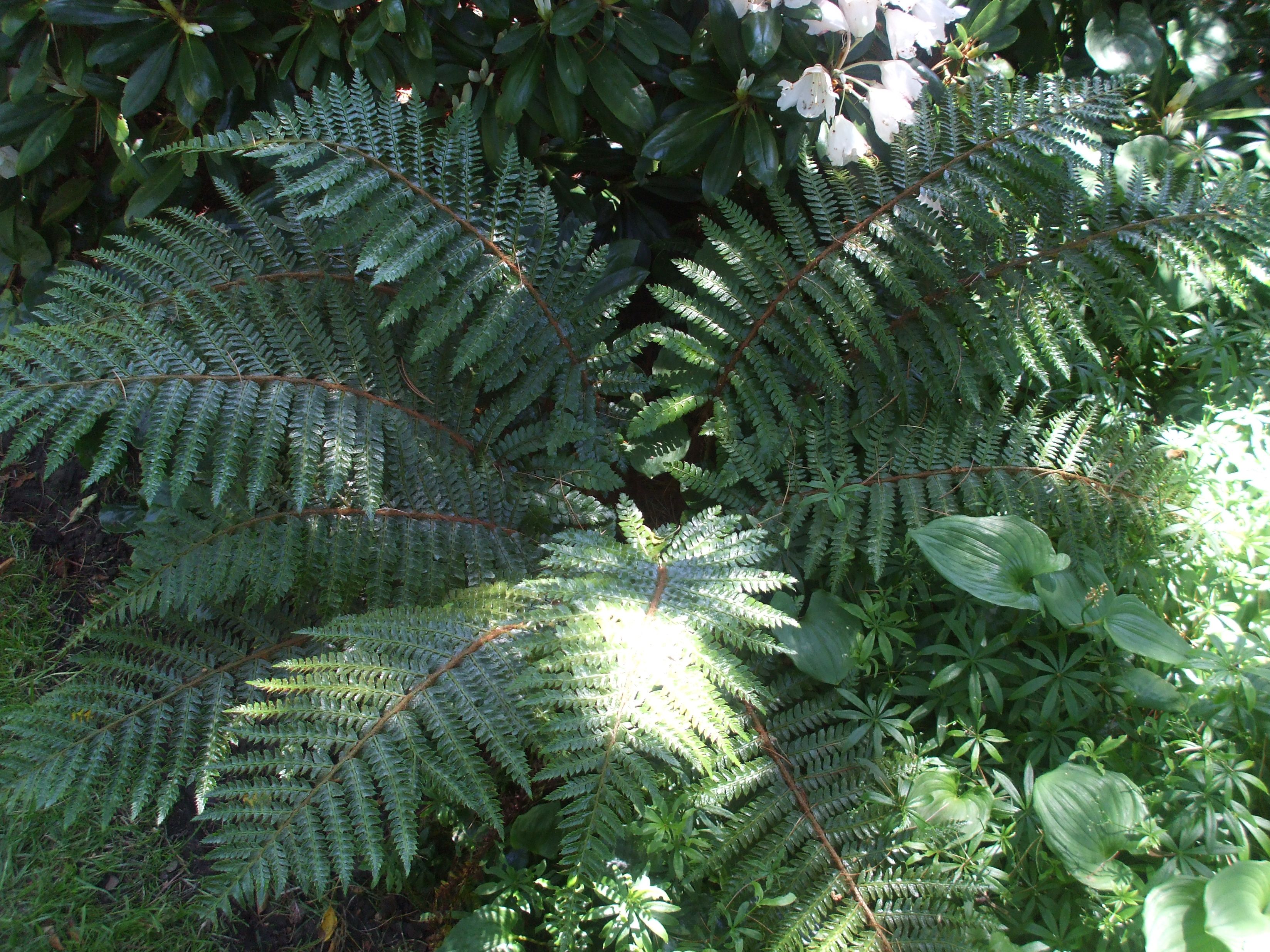
These ferns aren’t posing any problems

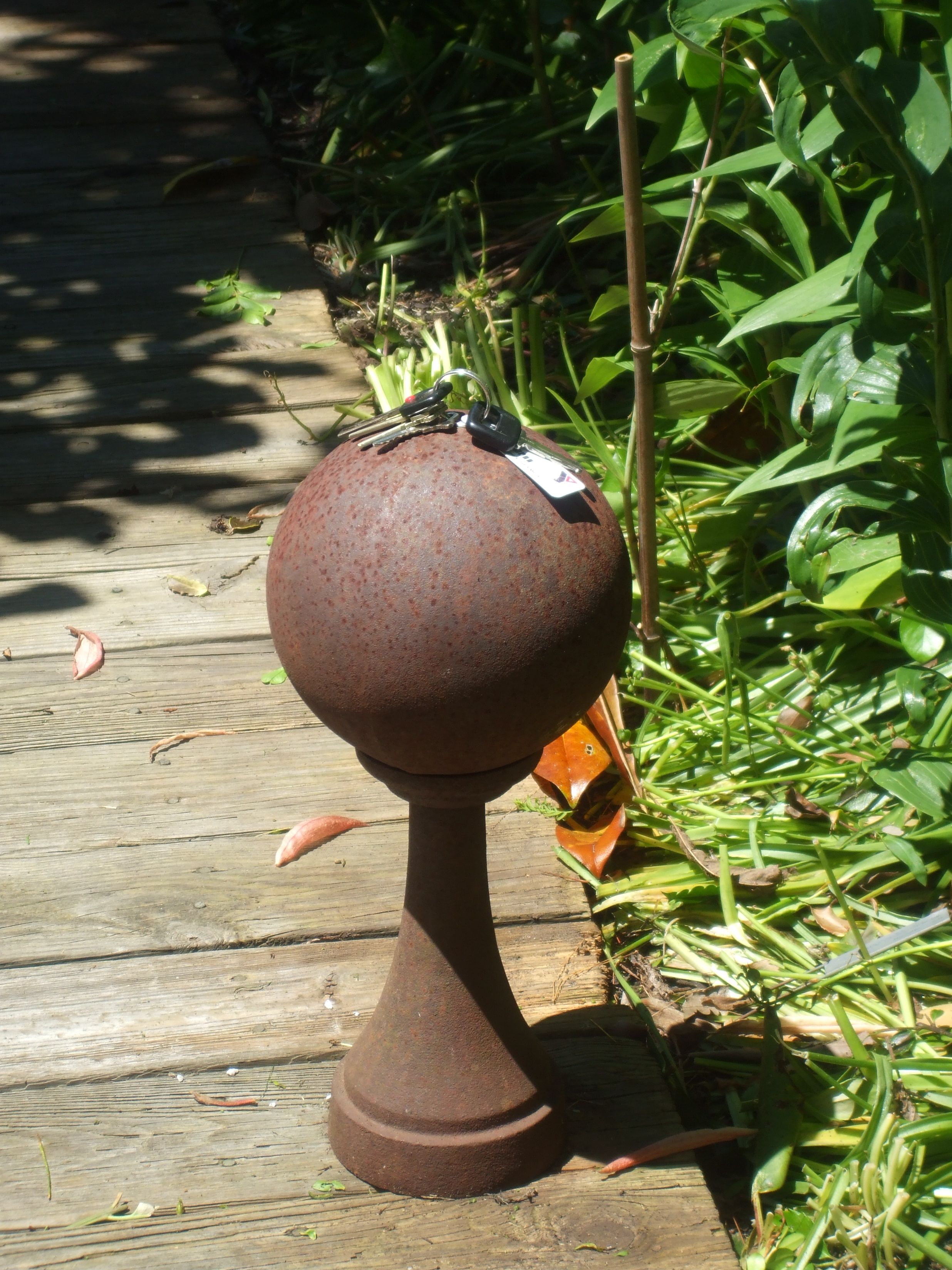
And because it feels so much like a house, visitors misplace keys and glasses just like they do at home.

My friend Cheryl is a skilled photographer. You can see her magical vision of the garden here.

You can only visit the garden during its Open Days. The next one is on Saturday, June 9.

Contemplating a Mid-Life Migration

Tags

, , , , , , , ,

Last weekend we shared homemade pizza with friends on our back deck while a great blue heron sailed overhead. Throughout the course of the meal, we heard orioles singing and saw flashes of orange as they flitted across the yard between their nest in the willow tree and the fruit trees in our garden. A grosbeak, hummingbirds, and various other winged residents also made appearances as they went about their evening business.

When you aren’t confronted by the ticks, poison ivy, and mosquitoes, and don’t have to cut the grass, weed the garden, or shovel the driveway when you’d rather be doing something else, this place can feel like paradise.

We moved to Concord almost 20 years ago, and Paul and I still remember a day that first spring when we looked out a window to see our 10-year-old son trailing a pheasant across the back lawn, nearly stepping on the end of its long, sweeping tail.

Our pheasant-follower and his younger brother grew up here. They went to school here. And now they have both moved on to make their own homes and create their own exciting adventures. And as hard it will be to leave this house and yard behind, Paul and I are ready to move on too.

At least we think we are.

In an ideal world, we could create an oasis like this one in the middle of some city. A city that has sidewalks, public transportation, and a rich cultural life —all things that are missing and are sorely missed in our current location.

I want diverse neighbors, a corner store, a local cafe, and a bit of nightlife. I’d love to attend a movie or a concert and then walk home afterward while discussing what we’ve just seen or heard.

In his recent op-ed piece for The New York Times about New York City’s new bike-share program, David Byrne captured my idealized version of city living as he described the different routes he takes on his bike to pick up groceries, commute to work, or visit friends. And he talked about making his home in the big city.

“I just turned 60 and have no plans to retire to the suburbs,” he writes. “I love it here.”

“That’s what I want,” I thought. “A place I can fall in love with, a place that stimulates my intellect and fosters my creativity.”

But then, just below his paean to urban life was another op-ed by his daughter, Malu, who described the optimal environments of young artists like herself who have left the city because of its high cost and many distractions.

“I might have to escape New York to keep my artistic spirit alive,” she writes.

Somewhere between Byrne’s viewpoint and that of his daughter lies the crux of my dilemma. I want the bustle and excitement of the city but not the noise. I want to be able to move around freely even when—especially when — I am too old to drive, but worry that the constant press of people will grate on my introvert soul.

While any place that Paul and I are together will feel like home, I also want to find  my own niche. I want to write in my office and then meet friends for coffee at a neighborhood cafe, or spend the afternoon wandering around a nearby museum.

I know that there is no ideal place, there are only places that you make idyllic. Paul and I will take a few trips, and maybe someplace will click for both of us. Maybe no place will, and we’ll decide that this is the only home we want.

In the meantime, it’s fun to weigh our options and examine the possibilities. That’s the joy of being middle aged. Even with financial restrictions, we are as free as we’ll ever be to do what we want.

I will be sad when/if we leave this house and town that has become so familiar and where we have lived so much life. And I’ll miss those birds. But I’m also ready to follow their example. Yes, they return every spring, but in the fall they leave that empty nest without hesitation. They move forward.

Armchair Traveler

Tags

, , , , , ,


Yep, it’s a pretty slow day here at the homestead. We’re just sitting around and thinking, cogitating, mulling things over, chewing the fat with ourselves. You get the picture

When I find myself stuck in the mental doldrums where there is both everything and nothing to write about, I look for inspiration elsewhere.

I didn’t have to look far: This morning two beautiful pieces about traveling crossed my screen almost simultaneously.

The first is by my long-time friend Martha Nichols. In her piece, “Why Travel?” she describes what travel does to her “inner landscape.”

“When you go to a new place, you’re more vulnerable,” she writes. “It’s as if a crack of light opens in the clouds, illuminating your inner landscape as well as what’s passing outside.”

This piece reminds me that no matter how far I roam, I can never escape myself. Martha explains why the hard parts of travel are also the most valuable.

Then, over at Lost in Arles, my new friend Heather Robinson tells the story of how she came to live in Arles. She says it’s a story that bears repeating and I say it’s a story worth sharing.

“Inside an abandoned church, we looked at the work of Harry Gruyaert’s ‘Rivages,’ ” she recalls. “We turned ourselves towards beauty and that stirring surged up into tears. We knew. This was where we were ready to be.”

Indeed, Heather’s entire blog is a celebration of the beauty she finds in the landscape, villages, and food around her. Every one of her posts is un petit cadeau dropped into my inbox.

And then, because I also needed a bit of bucking up, I reread a favorite piece by Dominique Browning. “Go where the love is,” she advises.

“That means not only doing what you love, but being where people love you–where they understand what you do, and, more important, where they have an affinity for who you are. Where the wellspring of creativity can be nurtured.”

And that’s what I’ve been doing these past couple of years as I search for new ways of working. Her post reminds me that if I keep planting the right kind of seeds, something satisfying and meaningful will eventually take root.

And finally, I leave you with this video of fearless young women cruising down la Sierra de Madrid. I may have a middle-aged body, but my spirit still soars like a twenty-something’s and I can feel the wind in my face and the road vibrating under my wheels as I watch them sail down the mountain on their longboards.

This Mother’s Day, I’m Thanking the Men in my Life

Tags

, , ,

During my sophomore year of high school, my mother took me to a jewelry store at the local shopping center. She wanted to buy me a bracelet. The two of us picked out a nearly one-inch-wide cuff of sterling silver.

I remember the day as being sunny, and not too cold as we walked outside from store to store. Looking back, I imagine us chatting and laughing at some story about one of her friends. We were comfortable together. At the time, it seemed like an ordinary mother-daughter moment.

A few months later, she was diagnosed with breast cancer, and a year after that, she was gone forever. In the wake of those facts, that we ever enjoyed such ordinary moments seems extraordinary.

Now that I’m a mom myself, I’ve learned to savor the everyday time with my sons. It’s in those moments when we truly connect as people. It might happen in the car, for example, when a son finally ‘fesses up to what’s been on his mind, or plugs in his iPod to share some music that exposes his softer, romantic side.

Sometimes we connect over food, or while walking around a son’s new neighborhood. A spark might flare in a complicit, but loving, exchange of looks triggered by something amusing that Dad has just said or done (usually in the kitchen).

I love those exchanges. They say, “I know you,” and they almost always show me something new about myself and the people I love.

My mom has been gone for my entire adult life. And while the example she set as a mother is forever imprinted on my psyche, it’s the men in my life who have taught me the real down-in-the-trenches lessons of mom-dom.

My husband not only taught me how to make an infant laugh, he continues to give me the young man’s point-of-view when there’s something going on that I just don’t get. And each of my sons, in moments both painful and gratifying, have shown me something that I needed to know, or pushed me to acknowledge something that I didn’t want to see.

So this Mother’s Day, as I remember my own mother, I also give a nod to the men in my life. Thanks guys, you make my life more beautiful every day.

Giants, Fauna, and Flora, Oh My!

Tags

, , , , ,

It was a busy week in the woods for Karina and me. On Monday, she was chased by a giant. (Apologies in advance for the poor filming. Think “The Blair Witch Project.”)

(Next time I’ll hold the camera horizontally.)

Then on Thursday, when we reached the spot where I usually let Karina off her leash, she suddenly lurched forward. There was a rush of wings and a bird I’d never seen before flew up onto a nearby tree.

It looked a lot like my old friend Woody Woodpecker. I wondered if I was hallucinating. How could something so fabulous be here?

I wasn’t quick enough with the iPhone to get a photo. In fact, I wish I hadn’t tried, because by the time I’d dug it out of my pocket, the bird had silently disappeared.

When I got home, I learned that it was a pileated woodpecker, fairly common in these parts, even though I’d never seen one before.

Photo courtesy of National Geographic

On Friday, we went back and gathered evidence.

And then this morning, I was reminded that in addition to giants and woodpeckers, fabulous things are turning up in these woods all the time.

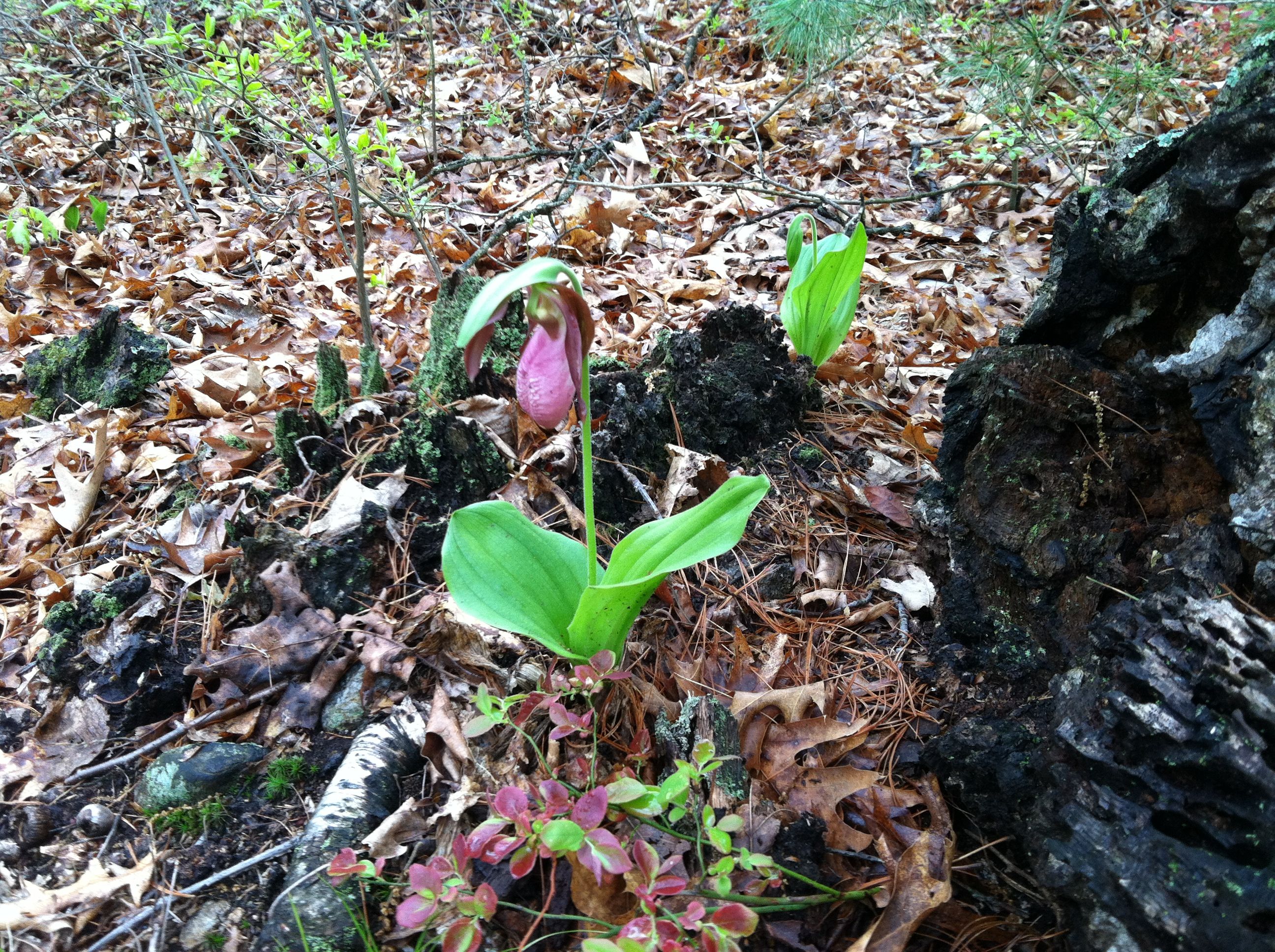
Lady slippers are one of my favorite harbingers of spring. They are something I have seen my entire life. Some years they spring up all over these woods. Theirs is a delicate beauty.

I want my grandchildren to come here and see them some day, and I want them to feel the thrill that I felt when I saw my first pileated woodpecker.

That’s a big reason why I write for Moms Clean Air Force. We all need to protect our Mother Earth. In addition to this week’s woodland adventures with Karina, I also wrote a post for them about why Concord’s ban on plastic water bottles is a step forward for clean air.

Happy trails everyone!

Looking Beyond the Weeds

Tags

, ,

In gardening, as in life, it’s easy to get stuck in the weeds. It’s easy to focus on the unwelcome clumps of grass and dandelions, the bugs, and the Hostas behind the garage that aren’t coming back.

We gardeners have to remind ourselves that the garden is there to enjoy. It’s a place to bathe our eyes in beauty; inhale the scent of the ground, the trees, the plants and their flowers; and absorb the steady thrum of nature all around us.

It’s true that sometimes what we have doesn’t live up to our vision, but what in life ever does?

So after spending these past weeks lingering in life’s doldrums, I decided to back away from my desk, pick up my camera, and admire what is growing all around me.

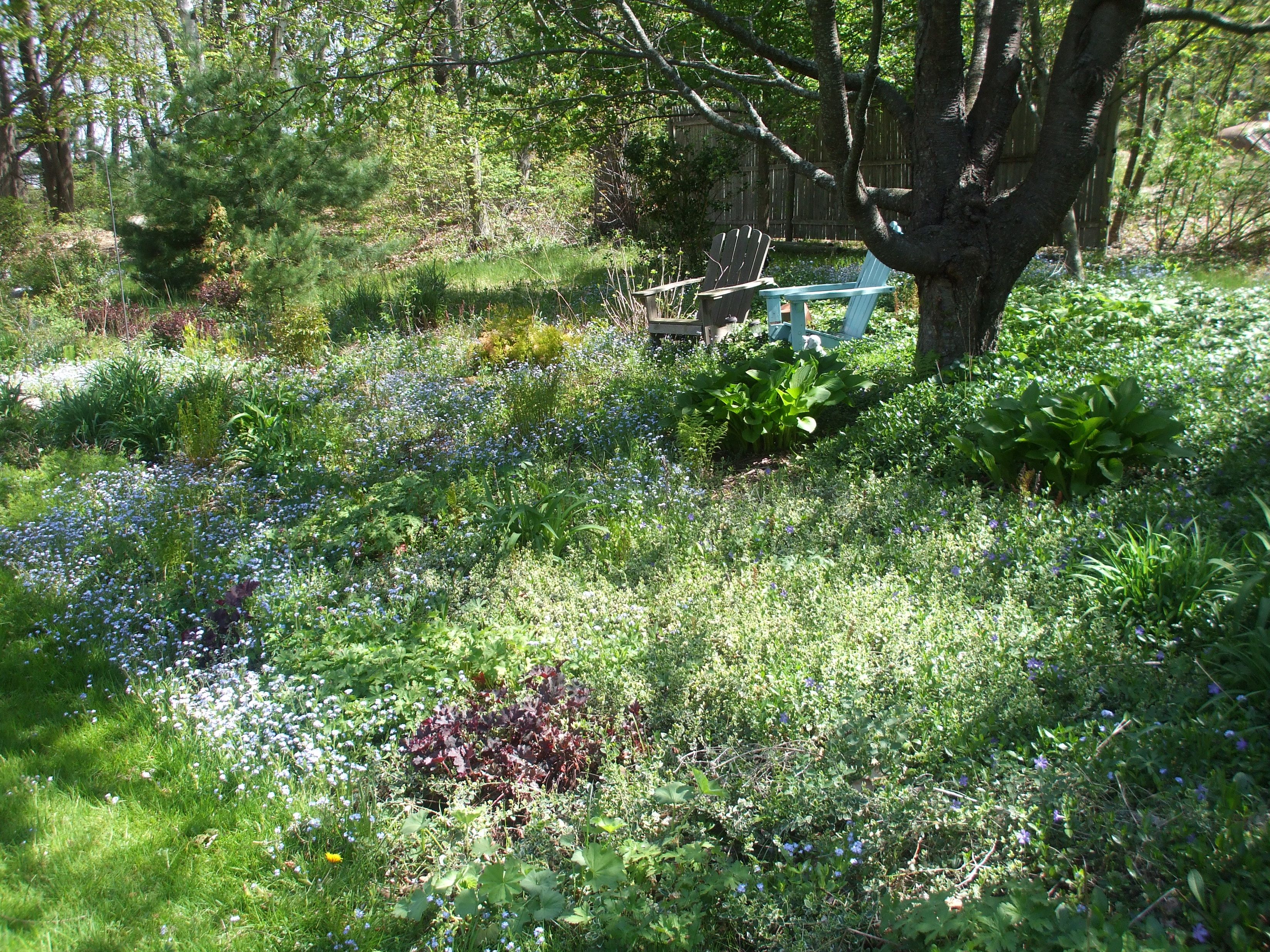
Here is a wide view of our back garden, painstakingly dug out of an established lawn.  It took a couple of seasons to remove all the grass, (which continues to fight its way back in). I love it best in spring when it is a sea of blues and greens, punctuated with a smattering of winey red.

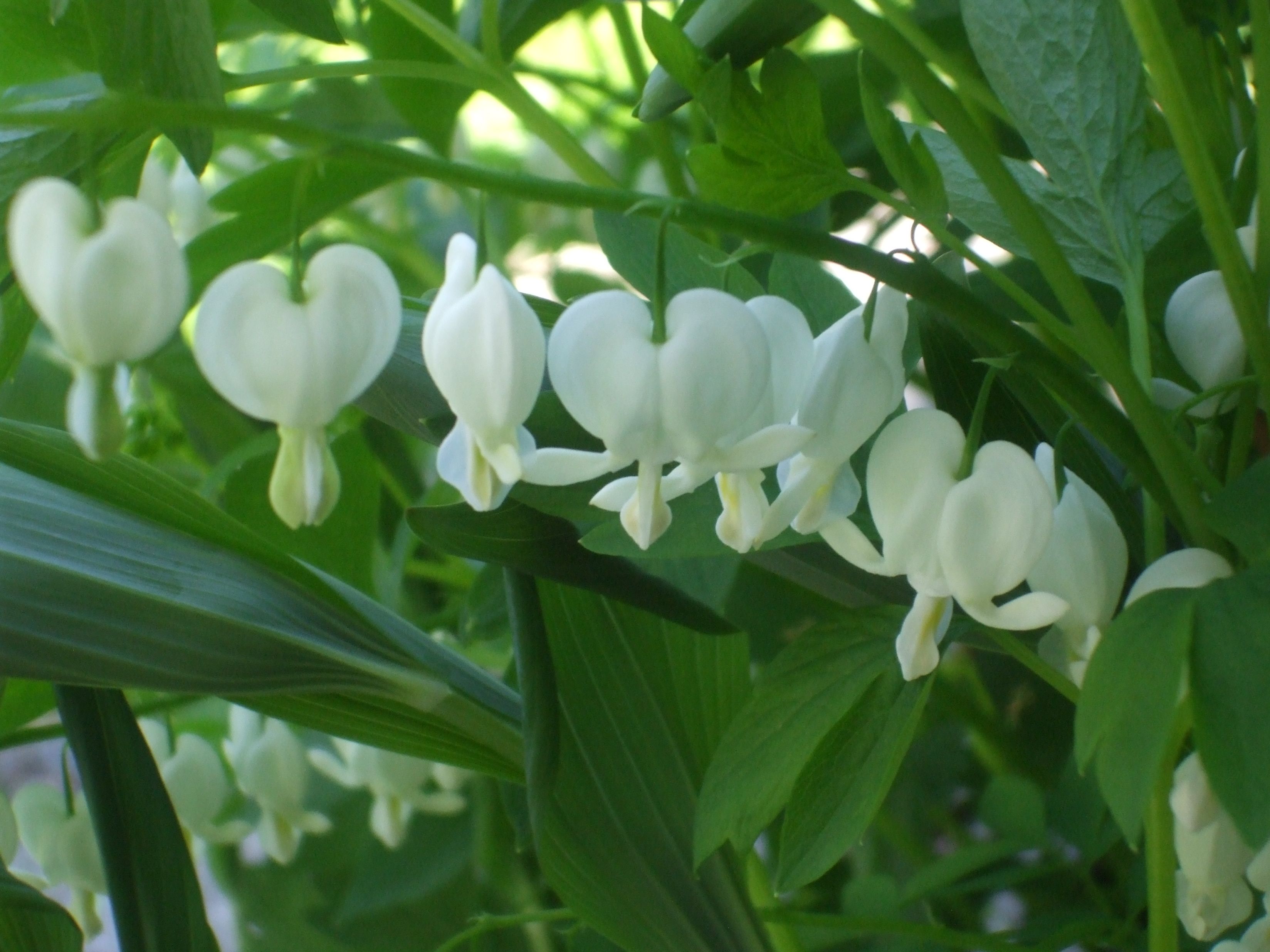
Just look at these Bleeding Hearts. Doesn’t their amazing shape and pure color make your own heart go pit-a-pat?

So many shades of ivory.

And here is some Solomon’s Seal getting ready to unfurl its string of pearls. These plants, along with some May Apple came from Marilyn, my neighbor at the Hawthorne Inn. These plants were already 50 years old when she first brought them down from Maine 35 years ago.

Oooh and there’s my Painted Fern! I always keep my fingers crossed that it will return each year.

The longer I’ve gardened, the more I’ve come to value the foliage as much as the flower. The leaves have to be interesting, because they are what you see for most of the growing season.

These Japanese Anemones are one example. They provide texture all summer. Then in the fall, they sprout their deep pink and white flowers. A lovely surprise when everything else in the garden has started to fade.

Lady’s Mantle leaves love to cup rainwater and dew, but they are experiencing an unusually dry spring. These plants came from Kathleen’s garden.

Like the Lady’s Mantle, this Yarrow from my friend Connie will eventually sport flat hats of yellow flowers. But it is already giving off its own musky scent. In fact, that aroma stopped me cold the first spring after I’d planted it, when I took it for a weed and almost pulled it out.

My friend Beverly, gardener extraordinaire, who lives in a little cottage down the street, shared some European Ginger with me a few years ago. It won’t bloom at all, but the sight of those crisp, shiny leaves can really cool you down on a hot day.

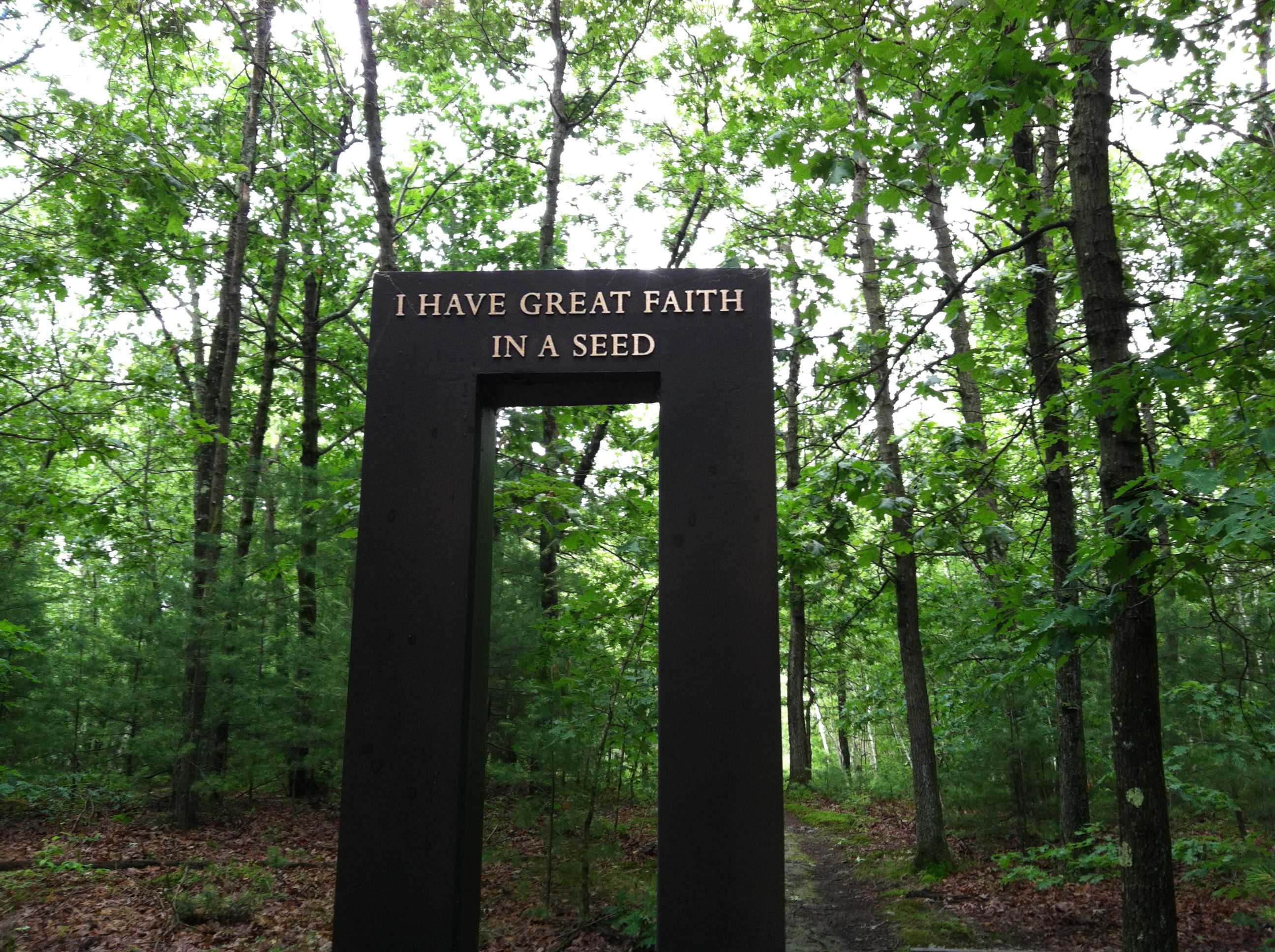
It’s so much easier to get stuck in the weeds/doldrums than it is to pull oneself out. But as any gardener knows, growing a garden takes persistance, care, and a bit of faith. You have to plant seeds, water, and pay attention. Eventually roots will form and something wonderful will emerge from the soil.

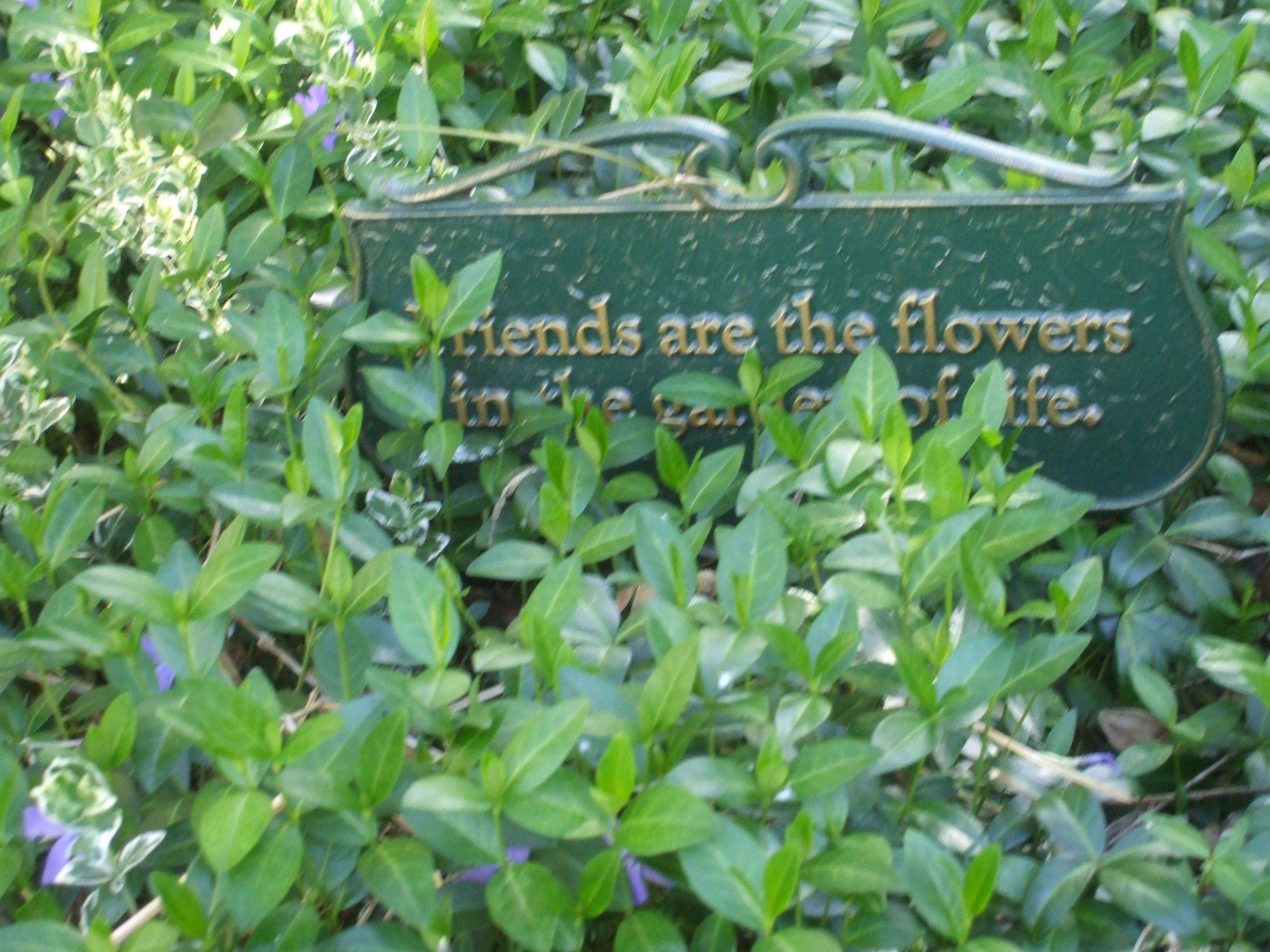
This sign is a gift from Carol, one of our oldest friends. Whenever I feel as though no one else gets me, she always does.